
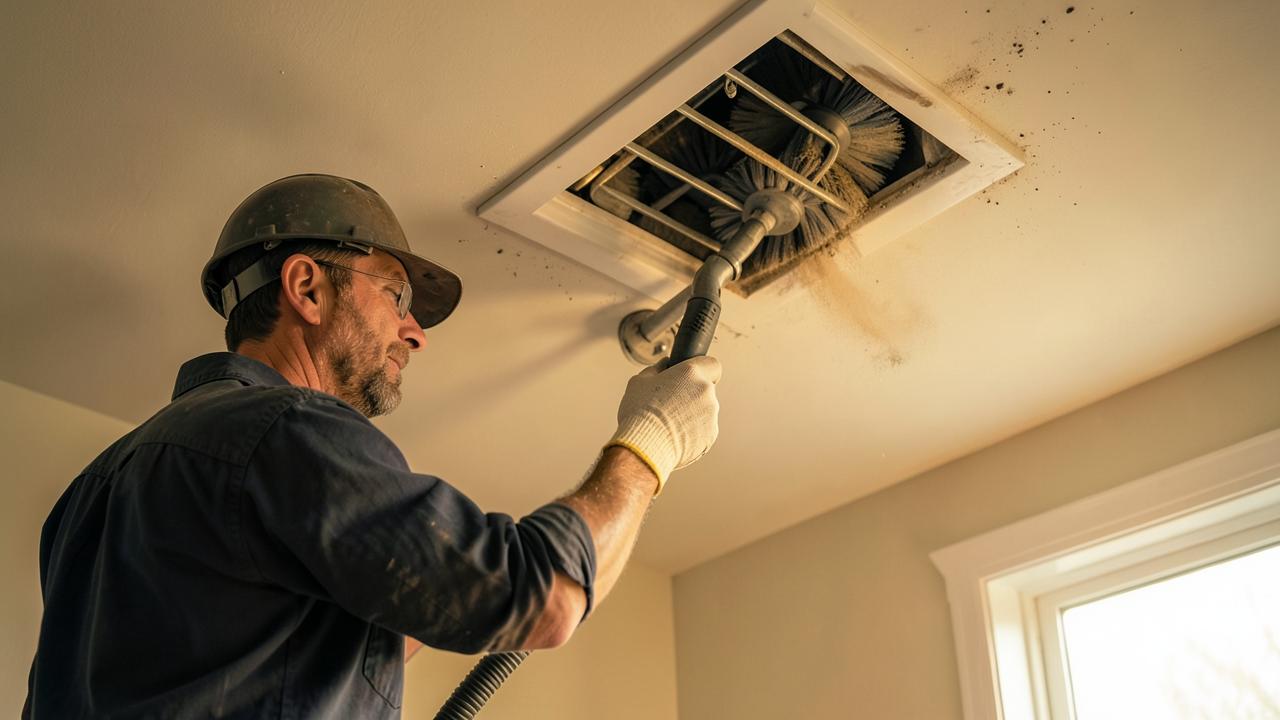
Air Duct Cleaning in Green Valley, CA
Source removal cleaning of supply, return, and air handler components. Performed directly by our own crews for Green Valley homes and businesses.
Air Duct Cleaning in Green Valley is shaped by conditions that do not apply evenly across Solano County. Green Valley has direct wildland interface on both sides of the valley, and the combination of grassland, oak woodland, steep terrain, and limited access roads makes this one of the higher wildfire exposure areas in our service territory. Smoke intrusion during regional fire events is heavy and prolonged because the valley holds smoke. Post-event work commonly includes duct decontamination, contents cleaning, and odor treatment on properties well away from any actual burn.
The building stock matters as much as the weather. Green Valley includes larger custom homes on acreage, established mid-century properties, and newer development associated with the country club area, so construction era and quality vary widely from parcel to parcel. That construction profile changes what we expect to find once an assembly is opened, and it changes the sequence of the work rather than just the paperwork on it.
The valley is enclosed by hills on both sides and drains south through Green Valley Creek toward Cordelia and the slough. That containment means runoff concentrates rather than spreading, and creek-adjacent parcels experience the consequences during intense rainfall. For air duct cleaning specifically, that geography determines both how a loss develops and how quickly a building recovers once mitigation begins.
Green Valley is a short drive from our Fairfield base, though access on rural parcels and during storm conditions takes planning. We assess large properties systematically rather than only where the symptom appeared, because on acreage the source and the symptom are often in different buildings.
Commercial activity includes vineyard and agricultural operations, the country club and its facilities, and small businesses along Green Valley Road, along with the business parks at the valley's southern end near Cordelia. Agricultural and hospitality properties have seasonal timing constraints that shape when disruptive work can happen.
Why Green Valley properties see this loss
The valley is enclosed by hills on both sides and drains south through Green Valley Creek toward Cordelia and the slough. That containment means runoff concentrates rather than spreading, and creek-adjacent parcels experience the consequences during intense rainfall.
Elevation and slope vary considerably. Hillside parcels have their own drainage, often relying on engineered swales, culverts, and site grading that require maintenance to keep functioning.
The surrounding hills are grassland and oak woodland, which is classic wildland urban interface, and the valley's orientation channels wind along its axis during storm events.
Construction and renovation dust is the most common reason ducts genuinely need cleaning, particularly drywall dust, which is fine, abundant, and gets pulled into returns during any interior project.
Fire and smoke events deposit residue throughout the duct system, and that residue holds odor and redistributes it every time the system cycles.
Moisture in the system, from a leaking coil, a blocked condensate drain, uninsulated ducts sweating in a hot attic, or humid air infiltrating through duct leaks, creates the conditions for growth inside the ductwork itself.
What the work involves
Source removal means putting the system under negative pressure with a collection unit, then mechanically agitating the interior surfaces of the ductwork so debris is released into the moving airstream and captured rather than redistributed. Every branch is addressed, not just the trunk lines that are easy to reach.
The air handler is as important as the ducts, and often more so. The blower wheel, coil, drain pan, and cabinet accumulate the heaviest deposits, and a coil packed with debris both reduces system efficiency and provides the damp, dark surface that supports microbial growth. Cleaning ducts while leaving a fouled blower and coil in place produces very little benefit.
Registers, grilles, and the boots behind them are cleaned individually, and the system is inspected for the conditions that caused the problem in the first place, including duct leakage, missing insulation on ducts in unconditioned attics, undersized returns, and filter housings that let air bypass the filter entirely.
Warning signs
- Visible dust or debris blowing from supply registers when the system starts
- Dust reappearing on surfaces within a day or two of cleaning
- A musty smell that appears specifically when the HVAC runs
- Smoke odor that returns with heating or cooling after a fire event
- Visible growth on register faces, in boots, or around the air handler
- Uneven airflow between rooms, or noticeably reduced airflow overall
- Rodent or insect evidence in or around ductwork
Odor that appears only when the system runs is the clearest indicator that the problem is inside the system rather than in the room. That distinction matters because treating rooms while the source sits in the ductwork means the odor returns on the next cycle.
Our process in Green Valley
- Step 1System inspection
We inspect the ductwork, air handler, coil, and blower to determine what is actually present and whether cleaning will accomplish anything. Where the answer is no, we say so.
- Step 2Access and containment
Access points are created where needed, registers are removed, and the working area is protected so nothing is tracked through the building.
- Step 3Negative pressure setup
A collection unit places the system under negative pressure so everything dislodged travels into capture rather than into the rooms.
- Step 4Mechanical agitation and extraction
Brushes, air whips, and compressed air tools dislodge debris from duct interiors branch by branch while the system remains under negative pressure.
- Step 5Air handler component cleaning
Blower wheel, coil, drain pan, and cabinet are cleaned directly, since these hold the heaviest and most consequential deposits.
- Step 6Registers, grilles, and boots
Each register and grille is cleaned individually and the boot behind it is addressed rather than skipped.
- Step 7Treatment and verification
Antimicrobial treatment is applied where growth was present and appropriate, the system is reassembled, filters are replaced, and we walk the result with you.
Residential and commercial
For homes, we protect flooring and furnishings along the work path, clean every branch rather than sampling, replace filters, and leave the system running properly. Homes with pets, allergy concerns, or a recent renovation see the clearest benefit.
For commercial systems, scope varies with equipment. Rooftop units, multi-zone systems, and larger air handlers require different access and staging, and work is scheduled around occupancy. Documentation is provided for facilities records and maintenance programs.
Commercial activity includes vineyard and agricultural operations, the country club and its facilities, and small businesses along Green Valley Road, along with the business parks at the valley's southern end near Cordelia. Agricultural and hospitality properties have seasonal timing constraints that shape when disruptive work can happen.
Local building stock and what it changes
Green Valley includes larger custom homes on acreage, established mid-century properties, and newer development associated with the country club area, so construction era and quality vary widely from parcel to parcel.
Many properties have well and septic systems, detached structures, guest units, barns, and outbuildings, all of which expand the scope of a typical loss beyond the primary residence.
Larger homes often have complex roof geometry with multiple valleys, dormers, and transitions, and those transitions are where wind-driven rain finds its way in.
Timeline and response
A typical single-system residential cleaning takes three to six hours depending on the number of branches and the condition of the air handler. Post-fire duct decontamination takes longer and is coordinated with the rest of the smoke remediation scope. Commercial systems are quoted and scheduled based on equipment and access.
Green Valley is a short drive from our Fairfield base, though access on rural parcels and during storm conditions takes planning. We assess large properties systematically rather than only where the symptom appeared, because on acreage the source and the symptom are often in different buildings.
Insurance and documentation
Routine duct cleaning is maintenance and not a claim item. Duct decontamination performed as part of a fire, smoke, or water loss is typically part of the covered mitigation scope, and we document it as a distinct line item within that scope.
What affects cost
- Number of systems and total number of supply and return branches
- Condition of the air handler, coil, and blower
- Whether antimicrobial treatment or sealing is required
- Access difficulty, particularly attic and crawlspace duct runs
- Whether the work is part of a fire or mold remediation scope
- Commercial equipment type and after-hours scheduling
Preventing a repeat
- Change filters on schedule and use the correct size so air does not bypass the filter
- Seal return-side duct leaks, which pull unconditioned attic air into the system
- Insulate ducts running through unconditioned attics to prevent condensation
- Cover returns during interior construction to keep drywall dust out
- Keep the condensate drain clear so the pan does not stand full of water
Keep exploring
Answers to common questions
Air Duct Cleaning in Green Valley, done right
We perform the work ourselves, we document it for your carrier, and we tell you plainly what does and does not need to be done. Trusted since 2005.