Restoration Services in American Canyon, CA
Water, fire and smoke, mold, storm, sewage, and rebuild work for American Canyon property owners. Trusted since 2005.
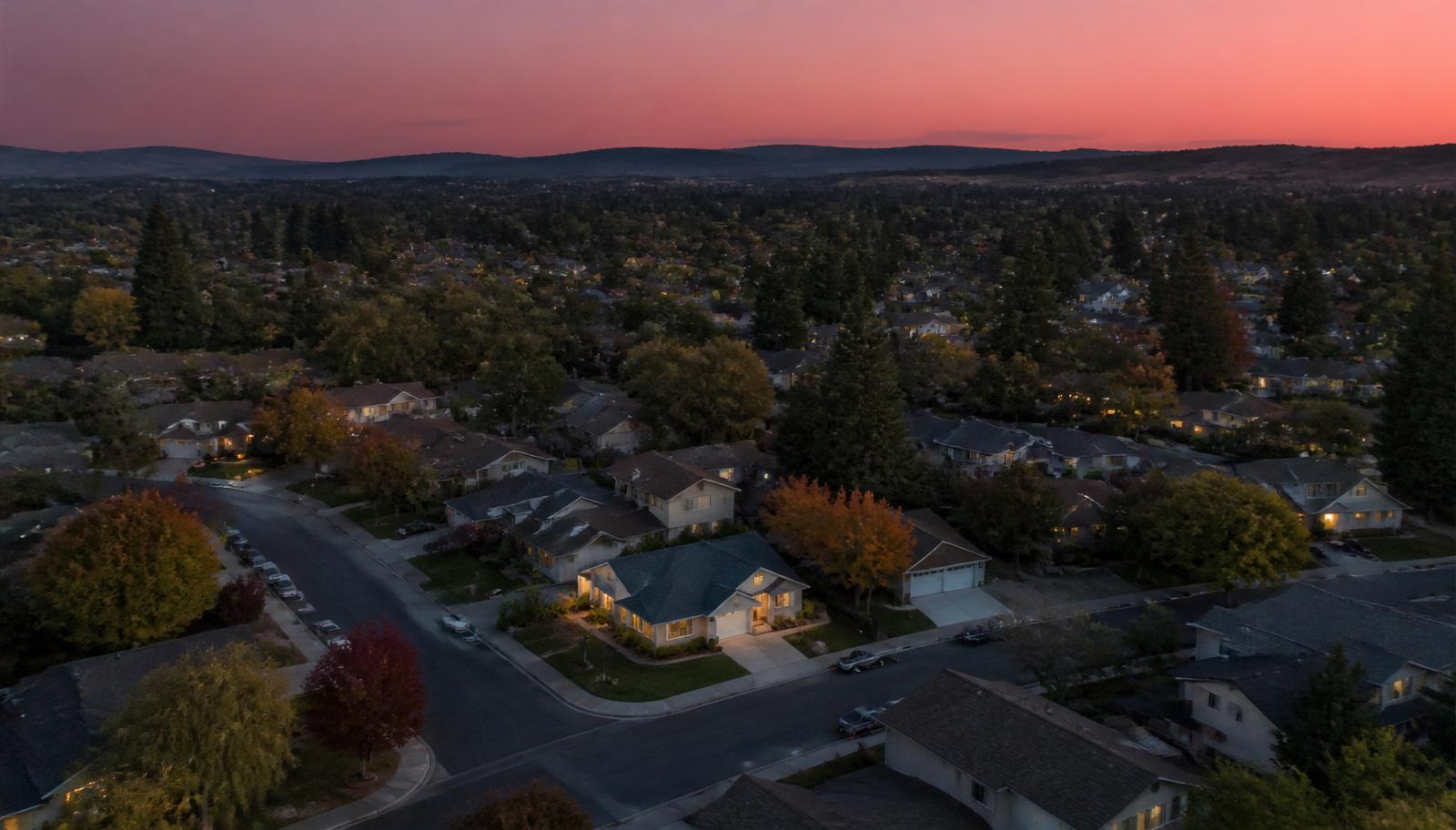
American Canyon sits at the southern end of Napa County between Vallejo and Napa, and it is the newest city in our service area by a wide margin. Most of its development happened from the 1990s onward, which gives it a building stock profile unlike the historic cities on either side of it.
Newer construction changes the restoration picture in specific ways, and Finishing Touch HS approaches American Canyon accordingly, focusing on the failure modes that modern tight construction actually produces rather than the ones that dominate century-old buildings.
Geography and conditions in American Canyon
American Canyon sits on the flat land between the Napa River marshlands to the west and the hills to the east, at the transition from San Pablo Bay influence to the Napa Valley.
Marine air moves through from the bay, producing cool humid mornings and moderate temperatures, and wind is a regular condition given the open terrain and bay proximity.
The western edge borders wetlands and low ground with high groundwater, while the eastern side rises toward the hills, producing a meaningful moisture gradient across a fairly small city.
Local building stock
The overwhelming majority of residential construction dates from the 1990s through the present, built to modern standards with tight envelopes, dual-pane windows, and current insulation values.
Two-story tract homes with upstairs bathrooms and laundry rooms are the dominant type, which sets the primary water loss pattern.
There is a substantial and growing warehouse and distribution presence on the west side, with large-footprint industrial buildings that have their own restoration considerations.
Risk profile for American Canyon
Supply line and appliance failures are the dominant category, and in two-story tract homes an upstairs failure becomes a two-floor loss with ceiling collapse potential. Modern tight construction is the complicating factor, because a well-sealed building does not dry passively. Water that gets into an assembly stays there without mechanical drying, and the same tightness means interior humidity from the event itself has fewer paths out. Low-lying western areas near the wetlands see groundwater and drainage-related intrusion.
Newer construction with modern electrical systems reduces the legacy electrical fire risk that dominates older cities. Kitchen fires remain the leading residential origin. The eastern hills carry seasonal grassland fire exposure, and regional wildfire smoke affects American Canyon strongly given its position at the mouth of the Napa Valley, where smoke from valley and hill fires funnels south.
Tight modern construction cuts both ways. Well-sealed buildings resist water intrusion better, but when moisture does get in it does not leave without help, and interior humidity from ordinary occupancy has fewer escape paths. Bathroom exhaust performance matters more here than in a leaky older house. The low-lying western areas add groundwater pressure on slab and crawlspace assemblies. Post-loss drying that is stopped early is the most common cause of mold in this housing stock.
Wind off San Pablo Bay across open terrain is the main storm factor, affecting roof edges, fencing, and the large roof surfaces on warehouse and distribution buildings. Rain-driven risk concentrates in the low western areas where drainage capacity and groundwater limit how much water the ground can absorb.
Modern infrastructure means fewer aging lateral failures than in Vallejo or Benicia. Backups here are more often blockage related or associated with heavy rain infiltration in the low-lying areas. Commercial and industrial properties with floor drains and process discharge have their own considerations.
Commercial property in the area
American Canyon has become a significant warehouse, distribution, and light industrial hub serving both the Napa Valley wine industry and broader regional logistics. Large-footprint buildings with flat roofs, extensive sprinkler systems, and high-value stored inventory dominate. Sprinkler discharge is a genuine and underappreciated water loss category in these buildings, capable of putting an enormous volume of water onto stored product in minutes.
Response and access
American Canyon is a straightforward run from Fairfield. We plan for tight-envelope drying in residential work, meaning more dehumidification capacity relative to square footage, and for large-volume response in warehouse and distribution properties.
- Napa River wetlands and western low ground
- Highway 29 commercial corridor
- Warehouse and distribution district serving the Napa Valley
- Eastern hills and grassland edge
Services we provide in American Canyon
Nearby towns we serve
Answers to common questions
Restoration help in American Canyon
We perform the work ourselves, we document it for your carrier, and we tell you plainly what does and does not need to be done. Trusted since 2005.