
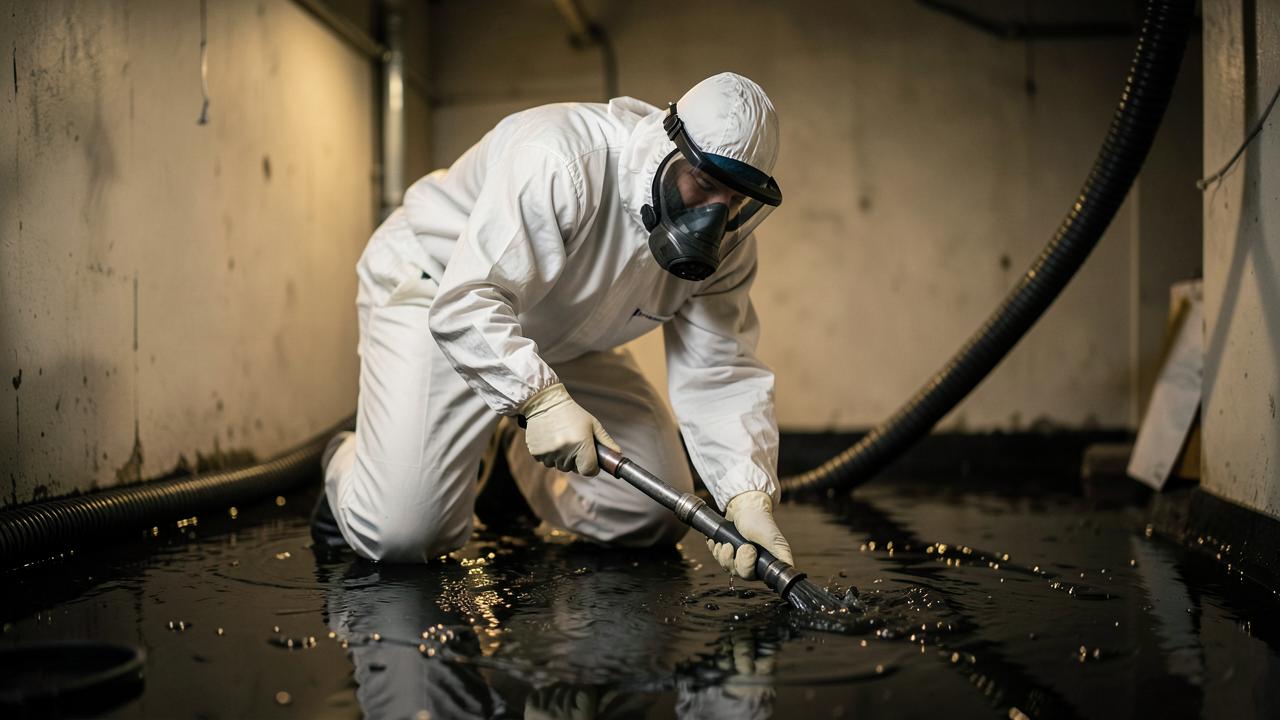
Sewage and Biohazard Cleanup in Fairfield, CA
Contained removal, disinfection, and safe disposal of contaminated material.
Sewage and biohazard losses are handled under different rules than ordinary water damage, because the hazard is biological rather than structural. Category three water carries bacteria, viruses, and other pathogens, and the correct response is removal and disinfection rather than drying in place. This is not a job for a wet vacuum and a bottle of bleach.
Finishing Touch HS performs this work directly with the containment, personal protective equipment, disinfection, and disposal handling the situation requires. We treat sewage and biohazard work as a health protection job first and a property restoration job second, and the sequence of the work reflects that.
What this work actually involves
The defining rule of category three work is that porous materials the contaminated water contacted come out. Carpet, pad, drywall below the water line, insulation, particle board, and unsealed subfloor are removed and disposed of, not cleaned and dried. Semi-porous and non-porous materials such as framing, concrete, tile, and metal can be cleaned and disinfected in place after removal is complete.
Containment and air management protect the rest of the building. Negative pressure, HEPA filtration, sealed work zones, and controlled removal paths prevent aerosolized contaminants from traveling through occupied space, which is a real risk once material is being cut and bagged.
Disinfection is a defined process, not a wipe-down. Surfaces are cleaned first to remove the soil load, then treated with an appropriate antimicrobial at the correct dwell time. Cleaning and disinfecting are two separate steps, and skipping the first makes the second largely ineffective.
Warning signs to look for
- Backup of water or waste at floor drains, tubs, or lowest fixtures
- Multiple drains in the building running slowly at the same time
- Gurgling from fixtures when another fixture is used
- Sewage odor inside the building or at a cleanout
- Standing water with discoloration, solids, or a foul smell
- Wet areas around a septic system or a saturated leach field
Multiple fixtures backing up at once almost always indicates a main line problem rather than a fixture problem, and continuing to run water in the building makes it worse. Stop using water and get the line assessed before the volume increases.
Common causes
Main line blockages from root intrusion, grease accumulation, collapsed clay pipe in older neighborhoods, and foreign objects are the most common cause of residential sewage backups.
Municipal system surcharge during intense rain can push water back through laterals into buildings, particularly in older areas where infiltration is high and in properties whose lowest fixtures sit below street level.
Failed sewer ejector pumps, septic system failures, and saturated leach fields produce slower but equally contaminated events, often first noticed as odor or wet ground rather than as an indoor backup.
Our process, step by step
- Step 1Safety assessment and access control
The affected area is secured and occupants are kept out. We assess electrical hazards, confirm the source is stopped, and establish the boundary of the contaminated area before entry.
- Step 2Containment and negative air
Sealed containment with negative pressure and HEPA filtration isolates the work zone so contaminants are not carried into clean parts of the building during removal.
- Step 3Extraction of contaminated water
Contaminated water and solids are extracted with dedicated equipment and disposed of according to applicable requirements. Equipment used on category three work is handled separately from clean water equipment.
- Step 4Removal and disposal of affected materials
Porous materials that contacted contamination are cut out to a defined boundary, bagged inside containment, and removed for disposal through a controlled path.
- Step 5Cleaning and disinfection
Remaining surfaces are cleaned to remove soil load, then disinfected with an appropriate product at the required dwell time. Framing, subfloor, and concrete are treated and, where indicated, sealed.
- Step 6Drying and odor control
The structure is dried to standard with monitoring, and odor treatment addresses residual smell in framing and adjacent assemblies.
- Step 7Restoration
Insulation, subfloor, drywall, trim, flooring, and finishes are rebuilt once the area is verified clean and dry.
What to expect during the job
Expect material removal rather than salvage. This is the correct response to category three water and it is not negotiable, because drying contaminated porous material leaves a health hazard inside a finished wall.
Expect the affected area to be closed off and occupancy restricted while the work is in progress.
Expect thorough documentation. These losses involve health considerations, and a clear record of what was removed, what was disinfected, and how the area was verified protects everyone involved.
Residential and commercial
In homes, the immediate concerns are keeping occupants and pets out of the affected area, protecting adjacent living space, and restoring usable bathrooms and laundry as quickly as the work allows. We are direct with families about what has to be thrown away and why.
In commercial buildings, particularly food service, healthcare, and multi-tenant properties, a sewage event carries operational and regulatory weight. We contain aggressively, work after hours where required, coordinate with health and facility requirements, and document the disinfection process in a form you can hand to an inspector or a property owner.
Timeline
Removal and disinfection of a contained residential area is commonly two to five days, followed by drying. Larger commercial events, septic-related failures, and multi-level backups take longer. Reconstruction is scheduled after the area is verified clean and dry.
Insurance and documentation
Coverage for sewage backup is frequently an endorsement rather than a standard inclusion, and limits are often specific. Where a backup results from a covered event, coverage is more likely. We document the source, the affected area, the removal and disposal scope, and the disinfection process, and we tell you plainly what we see rather than promising a coverage outcome that is not ours to promise.
What affects cost
- Volume of contaminated water and number of affected rooms or levels
- Quantity of porous material requiring removal and disposal
- Containment complexity in occupied or multi-tenant buildings
- Disinfection scope and any required sealing of framing or concrete
- Contents affected and whether any can be salvaged
- Reconstruction required after verification
Preventing the next one
- Have main lines scoped and cleared periodically in older neighborhoods with mature trees
- Install a backwater valve where fixtures sit below street level
- Never pour grease down a drain, it is the leading preventable cause of blockages
- Service sewer ejector pumps and septic systems on the recommended schedule
- Act on slow drains across multiple fixtures immediately rather than treating them one at a time
Sewage & Biohazard Cleanup by town
Related services
Answers to common questions
Need sewage & biohazard cleanup in Fairfield, CA?
We perform the work ourselves, we document it for your carrier, and we tell you plainly what does and does not need to be done. Trusted since 2005.