
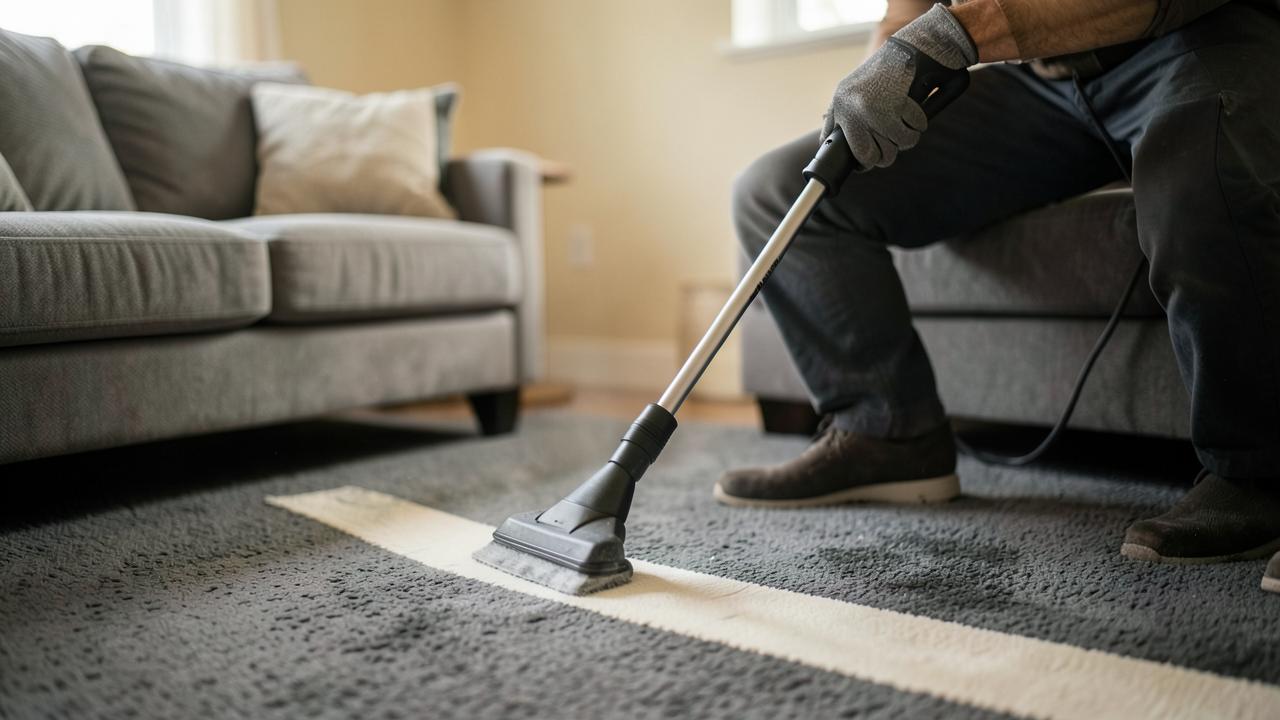
Carpet and Upholstery Cleaning in Vallejo, CA
Deep extraction cleaning for carpet, rugs, and upholstered furnishings. Performed directly by our own crews for Vallejo homes and businesses.
Carpet and Upholstery Cleaning in Vallejo is shaped by conditions that do not apply evenly across Solano County. Cool, humid marine conditions combined with old raised-foundation construction make Vallejo a high mold-risk city. Crawlspaces stay damp, plaster holds moisture, and historic homes often lack the ventilation modern codes require. Chronic low-grade moisture rather than acute water events accounts for a large share of the mold work here, which means the growth is usually well established before anyone calls.
The building stock matters as much as the weather. Vallejo has a large stock of genuinely historic housing, including Victorian and early twentieth century homes in the Heritage District and surrounding neighborhoods. These properties have raised foundations, original wood construction, lath and plaster walls, and complex layered repair histories. That construction profile changes what we expect to find once an assembly is opened, and it changes the sequence of the work rather than just the paperwork on it.
Vallejo sits on hills rising from the Carquinez Strait and the Napa River, with substantial elevation change across the city and a long waterfront. Marine influence is strong, producing cool, humid conditions and frequent fog, particularly on the west side. For carpet & upholstery cleaning specifically, that geography determines both how a loss develops and how quickly a building recovers once mitigation begins.
Vallejo is a short run down Interstate 80 from our base. We plan for older assemblies, plaster rather than drywall, crawlspace involvement, and the likelihood that opening a wall reveals prior repairs nobody documented. That expectation is why our Vallejo scopes hold up better than estimates written from photographs.
Vallejo's commercial base includes the waterfront and ferry terminal area, downtown and historic commercial buildings, Mare Island's mixed industrial and commercial redevelopment, and retail corridors along the main arterials. Historic commercial buildings present the same concealed-condition challenges as historic housing, at larger scale and with tenant occupancy to work around.
Why Vallejo properties see this loss
Vallejo sits on hills rising from the Carquinez Strait and the Napa River, with substantial elevation change across the city and a long waterfront. Marine influence is strong, producing cool, humid conditions and frequent fog, particularly on the west side.
The hillside terrain concentrates runoff during heavy rain, and older neighborhoods have drainage infrastructure that predates modern standards.
Wind through the Carquinez Strait is significant and constant, affecting exposed western and southern elevations year round.
Ordinary soil load is mostly tracked-in particulate, which is abrasive and cuts carpet fiber over time. This is why regular vacuuming does more for carpet lifespan than periodic deep cleaning.
Spills and pet accidents penetrate into pad and subfloor, where they support odor and microbial growth long after the surface looks clean.
Post-loss contamination, including smoke residue, elevated humidity from a water event, and construction dust from an adjacent rebuild, all leave soil that ordinary maintenance cleaning is not formulated to address.
What the work involves
Effective carpet cleaning is mostly about soil removal and water management. Dry soil removal comes first, since vacuuming lifts a large share of particulate before any moisture is introduced, and introducing water to dry soil turns it into mud that migrates into the backing. Pre-treatment follows, matched to the soil and the fiber, with adequate dwell time.
Hot water extraction, commonly called steam cleaning, is the primary method for most synthetic carpet. The variables that determine whether it works are solution temperature, pressure, extraction passes, and how much moisture is left behind. Over-wetting is the single most common failure, because a carpet that stays damp for more than a day develops odor and can wick stains back up from the pad.
Upholstery requires more care than carpet, because fabric, filling, and frame all respond differently to moisture. Fiber identification matters more, low-moisture methods are frequently the right choice, and drying has to be accelerated deliberately to avoid water rings, shrinkage, and frame staining bleeding through.
Warning signs
- Traffic lanes that stay visibly darker after vacuuming
- Carpet that feels stiff or crunchy underfoot from residue buildup
- Odor that returns as soon as humidity rises
- Spots that reappear days after being cleaned, which indicates wicking from the pad
- Upholstery with visible soil on arms and headrests
- Increased allergy symptoms in carpeted rooms
Spots that keep reappearing are the diagnostic sign worth understanding. It means the contaminant reached the pad or the cushion and is wicking back up as the material dries. Surface cleaning will never resolve it. The pad or fill has to be addressed directly.
Our process in Vallejo
- Step 1Inspection and fiber identification
We identify fiber type, backing, construction, and soil condition, and note any pre-existing damage or permanent staining before starting.
- Step 2Dry soil removal
Thorough vacuuming removes particulate before moisture is introduced. This step does more for the final result than any single chemical choice.
- Step 3Pre-treatment and agitation
Pre-spray matched to the soil and fiber is applied and given dwell time, with mechanical agitation where the carpet construction allows it.
- Step 4Spot and stain treatment
Specific stains are treated individually with the appropriate chemistry, since a single general solution does not address protein, tannin, oil, and dye stains equally.
- Step 5Hot water extraction
Cleaning solution is injected and immediately extracted with multiple passes, removing soil and as much moisture as possible in the same operation.
- Step 6Grooming and controlled drying
Pile is groomed to set the fiber, and air movers accelerate drying to keep the material from staying damp long enough to develop odor or wick.
- Step 7Post-cleaning inspection
We walk the work with you, address anything missed, and tell you honestly which marks are permanent damage rather than soil.
Residential and commercial
For homes, we work room by room, move and replace reasonable furniture, protect hard flooring and door casings, and set airflow so the space is usable the same day. Pet-affected areas are assessed for pad contamination rather than treated as a surface problem.
For commercial spaces, we schedule around operating hours, work in zones so areas can stay open, and use methods with faster dry times where downtime matters. Regular maintenance schedules are available for offices, retail, and multi-tenant properties where appearance is part of the business.
Vallejo's commercial base includes the waterfront and ferry terminal area, downtown and historic commercial buildings, Mare Island's mixed industrial and commercial redevelopment, and retail corridors along the main arterials. Historic commercial buildings present the same concealed-condition challenges as historic housing, at larger scale and with tenant occupancy to work around.
Local building stock and what it changes
Vallejo has a large stock of genuinely historic housing, including Victorian and early twentieth century homes in the Heritage District and surrounding neighborhoods. These properties have raised foundations, original wood construction, lath and plaster walls, and complex layered repair histories.
Mid-century housing associated with Mare Island and postwar growth fills large parts of the city, with the aging plumbing, electrical, and ventilation issues typical of that era.
Newer development on the north and east sides follows conventional tract patterns. The result is a city where the correct restoration approach varies dramatically by neighborhood.
Timeline and response
Most residential jobs are completed in a few hours, with carpet dry to the touch within four to eight hours depending on airflow and humidity. Upholstery is generally same day. Post-loss cleaning takes longer because pre-treatment and multiple passes are usually required.
Vallejo is a short run down Interstate 80 from our base. We plan for older assemblies, plaster rather than drywall, crawlspace involvement, and the likelihood that opening a wall reveals prior repairs nobody documented. That expectation is why our Vallejo scopes hold up better than estimates written from photographs.
Insurance and documentation
Routine cleaning is a maintenance expense rather than a claim item. Cleaning performed as part of a covered loss, such as smoke residue removal or post-water-event cleaning, is typically part of the loss scope. We separate maintenance work from loss-related work clearly in our documentation so there is no ambiguity.
What affects cost
- Square footage and number of rooms or upholstered pieces
- Fiber type and construction, since wool and natural fibers require different handling
- Soil level and whether specialty spot treatment is required
- Whether pad contamination has to be addressed
- Furniture moving requirements
- Scheduling constraints in commercial spaces
Preventing a repeat
- Vacuum high-traffic areas at least twice a week, slowly, with multiple passes
- Use walk-off mats at every exterior entry to capture particulate
- Blot spills immediately rather than rubbing, which drives contaminant into the backing
- Rotate and clean upholstery cushions periodically for even wear
- Schedule professional cleaning every twelve to eighteen months for typical households
Keep exploring
Answers to common questions
Carpet & Upholstery Cleaning in Vallejo, done right
We perform the work ourselves, we document it for your carrier, and we tell you plainly what does and does not need to be done. Trusted since 2005.