
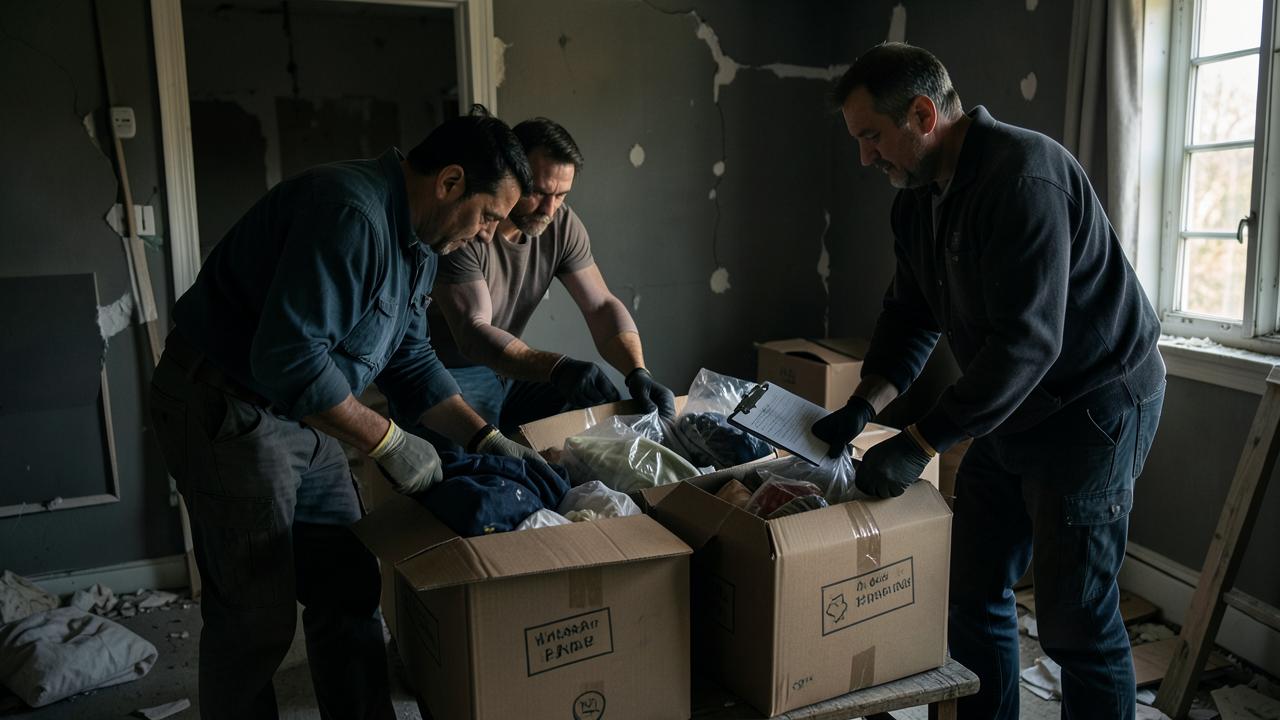
Contents Restoration and Pack-Out in Rio Vista, CA
Inventory, protection, cleaning, and safe storage of affected belongings. Performed directly by our own crews for Rio Vista homes and businesses.
Contents Restoration and Pack-Out in Rio Vista is shaped by conditions that do not apply evenly across Solano County. Structure fires follow standard patterns, with the older housing stock contributing legacy electrical risk. The surrounding Delta grassland and agricultural land dries out completely in summer, and constant wind makes grass fire behavior aggressive. Smoke from regional wildfire events reaches Rio Vista, though the persistent wind sometimes clears it faster than it clears inland.
The building stock matters as much as the weather. The older core of Rio Vista includes early and mid-century homes, many with raised foundations over crawlspaces, wood siding, and long histories of modification. That construction profile changes what we expect to find once an assembly is opened, and it changes the sequence of the work rather than just the paperwork on it.
Rio Vista sits directly on the Sacramento River where it meets the Delta, and much of the surrounding land is at or below sea level behind levees. Groundwater is high throughout the area and ambient humidity runs well above inland Solano County. For contents restoration & pack-out specifically, that geography determines both how a loss develops and how quickly a building recovers once mitigation begins.
Rio Vista is the most distant part of our Solano County coverage, so we plan mobilization carefully and arrive equipped for high-moisture conditions. We expect crawlspace involvement in older properties and check drainage and vapor barrier conditions as a matter of course.
Rio Vista's commercial base includes marina and boating businesses, restaurants and retail in the historic downtown, agricultural operations, and the wind energy and utility infrastructure in the surrounding Delta. Marina and waterfront businesses have the most exposure to wind and water events and the tightest seasonal operating windows.
Why Rio Vista properties see this loss
Rio Vista sits directly on the Sacramento River where it meets the Delta, and much of the surrounding land is at or below sea level behind levees. Groundwater is high throughout the area and ambient humidity runs well above inland Solano County.
Wind is a constant. The Delta is the primary channel for marine air moving into the Central Valley, and Rio Vista sits in the middle of that channel. Sustained wind is a daily condition, not a storm event.
The combination of high water table, high humidity, and constant wind produces building conditions unlike anywhere else in the county.
Water losses damage contents through direct saturation, wicking through the legs and bases of furniture standing in water, and elevated humidity affecting an entire room even where items were never touched by standing water.
Fire and smoke losses affect contents throughout a building, including in rooms the fire never reached, because smoke residue deposits on and inside porous items and holds odor indefinitely without proper treatment.
Sewage and biohazard events impose the strictest limits, since porous contents that contacted category three water generally cannot be salvaged regardless of value.
What the work involves
Contents work starts with triage. Every affected item is evaluated as salvageable on site, salvageable with off-site treatment, or non-salvageable. That decision depends on the material, the exposure, and the loss type. A hardwood dresser exposed to clean water for two hours and the same dresser exposed to sewage are entirely different outcomes.
Pack-out is the controlled removal of contents from the loss site. Items are inventoried with photographs and descriptions, packed with appropriate protection, and transported to a controlled environment where cleaning and deodorization can happen without the dust, humidity, and traffic of an active job site.
Cleaning methods vary by material and contaminant. Ultrasonic cleaning for hard non-porous items, appropriate surface cleaning for wood and painted finishes, specialized textile handling for clothing and soft goods, document handling for paper, and dedicated processes for electronics, which should never simply be wiped and plugged in after smoke or water exposure.
Warning signs
- Belongings stacked in an unaffected room without protection during mitigation
- Furniture sitting on wet flooring, which transfers stain and wicks moisture upward
- Smoke odor that persists in clothing and upholstery after normal laundering
- Electronics exposed to smoke or humidity being powered on before evaluation
- Documents and photographs left in a damp environment
- No inventory of what was moved, where it went, or what condition it was in
The absence of an inventory is the warning sign that matters most. Once contents are moved without documentation, both the claim and the accountability become difficult, and disputes about what was there before the loss are nearly impossible to settle after the fact.
Our process in Rio Vista
- Step 1Inventory and photographic documentation
Every item in scope is logged with condition notes and photographs before it moves. This record supports the claim and prevents disputes later.
- Step 2Triage and salvage decisions
Items are sorted into on-site protection, off-site treatment, and non-salvageable. Non-salvageable items are documented rather than discarded quietly.
- Step 3On-site protection
Items staying in place are blocked off wet flooring, covered, or relocated within the property to an unaffected area with appropriate protection.
- Step 4Packing and transport
Items designated for off-site treatment are packed with material appropriate to their fragility and transported in a controlled way, with the inventory traveling with them.
- Step 5Cleaning and deodorization
Each category is treated with the correct method, from ultrasonic cleaning through textile processing and controlled deodorization chambers for smoke-affected soft goods.
- Step 6Controlled storage
Cleaned items are held in a controlled environment until the structure is ready to receive them, which prevents recontamination from an active job site.
- Step 7Pack-back and reconciliation
Items return, are placed, and are reconciled against the original inventory so nothing is unaccounted for.
Residential and commercial
For households, this is the most personal part of a restoration project. We handle belongings accordingly, prioritize the items you tell us matter, and keep you informed about what is being treated and what is coming back.
For businesses, contents often means inventory, equipment, files, and furnishings that directly affect whether you can operate. We prioritize business-critical items, work to timelines that align with reopening, and produce documentation suitable for a commercial claim and for internal asset records.
Rio Vista's commercial base includes marina and boating businesses, restaurants and retail in the historic downtown, agricultural operations, and the wind energy and utility infrastructure in the surrounding Delta. Marina and waterfront businesses have the most exposure to wind and water events and the tightest seasonal operating windows.
Local building stock and what it changes
The older core of Rio Vista includes early and mid-century homes, many with raised foundations over crawlspaces, wood siding, and long histories of modification.
Trilogy at Rio Vista and other newer developments added a substantial volume of modern single-story construction on the southwest side, built to current standards and behaving very differently from the older stock.
Waterfront and marina-adjacent properties, including docks, boathouses, and river-facing structures, add exposure categories that inland properties do not have.
Timeline and response
Inventory and pack-out for a residential loss is typically one to three days depending on volume. Cleaning and deodorization run in parallel with structural work and are usually complete before the structure is ready. Pack-back is scheduled once reconstruction is finished and the space is clean.
Rio Vista is the most distant part of our Solano County coverage, so we plan mobilization carefully and arrive equipped for high-moisture conditions. We expect crawlspace involvement in older properties and check drainage and vapor barrier conditions as a matter of course.
Insurance and documentation
Contents are usually a separate coverage from structure, with their own limits and their own documentation requirements. A photographed, itemized inventory is the single most useful thing you can have during a contents claim. We produce that record as a matter of course and provide it to you and, at your request, to your adjuster.
What affects cost
- Volume of contents in scope and the packing material required
- Proportion requiring off-site treatment rather than on-site protection
- Cleaning methods required by material type and contaminant
- Duration of controlled storage before the structure is ready
- Specialty items requiring particular handling, such as electronics and documents
- Whether pack-back and placement are included
Preventing a repeat
- Keep a photographic record of rooms and valuables updated once a year
- Store documents and photographs in sealed containers off the floor
- Elevate stored items in garages, basements, and crawlspace-adjacent areas
- Keep an inventory of high-value items with purchase records where possible
- Do not power on smoke or water exposed electronics before they are evaluated
Keep exploring
Answers to common questions
Contents Restoration & Pack-Out in Rio Vista, done right
We perform the work ourselves, we document it for your carrier, and we tell you plainly what does and does not need to be done. Trusted since 2005.