Fire and Smoke Damage Restoration in Napa, CA
Soot removal, odor neutralization, and full structural cleanup. Performed directly by our own crews for Napa homes and businesses.
Fire and Smoke Damage Restoration in Napa is shaped by conditions that do not apply evenly across Napa County. Napa County's wildfire history is significant and recent, and it shapes how property owners here think about fire. Beyond direct structure loss, the dominant restoration reality is smoke. Regional wildfire events push heavy smoke into the city for extended periods, requiring duct decontamination, contents cleaning, and odor treatment on properties never touched by flame. Structure fires in the older downtown-adjacent housing carry legacy electrical risk, and hospitality and commercial kitchens add protein-residue fire exposure.
The building stock matters as much as the weather. Older neighborhoods near downtown include Victorian and early twentieth century homes with raised foundations, plaster interiors, and period detailing, plus a large mid-century stock through the central city. That construction profile changes what we expect to find once an assembly is opened, and it changes the sequence of the work rather than just the paperwork on it.
Napa sits on the valley floor along the Napa River, with hills rising on both the eastern and western sides. The river runs through the city, and flood history along it is a documented and defining part of local property risk. For fire and smoke damage specifically, that geography determines both how a loss develops and how quickly a building recovers once mitigation begins.
Napa is a short drive from our Fairfield base. We plan for older assemblies in the historic neighborhoods, for occupied-property protocols in hospitality work, and for smoke-related scopes across the whole city during and after regional fire events.
Napa's commercial base is dominated by hospitality, food service, wine production and tasting facilities, retail in the downtown and Oxbow districts, healthcare, and professional services. Hospitality and wine industry properties operate on seasonal calendars where downtime during peak season is enormously costly, and where finish quality and discretion during occupied work are non-negotiable. We phase and schedule accordingly.
Why Napa properties see this loss
Napa sits on the valley floor along the Napa River, with hills rising on both the eastern and western sides. The river runs through the city, and flood history along it is a documented and defining part of local property risk.
Marine air pushes up the valley from San Pablo Bay, producing cool mornings and moderating summer heat, with the moderating effect diminishing as you move north up the valley.
Substantial flood control work has changed the river's behavior through the city, but river-adjacent and low-lying parcels retain elevated water risk during major rain events.
Kitchen fires are the most frequent residential origin, and they are disproportionately smoke and odor jobs rather than structural burn jobs. A pan fire that is out in ninety seconds can still coat an entire floor of a house in protein residue.
Electrical faults in older panels, aluminum branch wiring, overloaded circuits, and failing appliances produce fires that often start inside walls or attics, which means the smoke has direct access to cavities and insulation before anyone sees a flame.
Wildfire and exterior smoke intrusion is a real category in Solano and Napa counties. A property can require full smoke remediation without any fire ever touching it, when days of heavy regional smoke are pulled into a building through HVAC intake, attic venting, and ordinary infiltration.
What the work involves
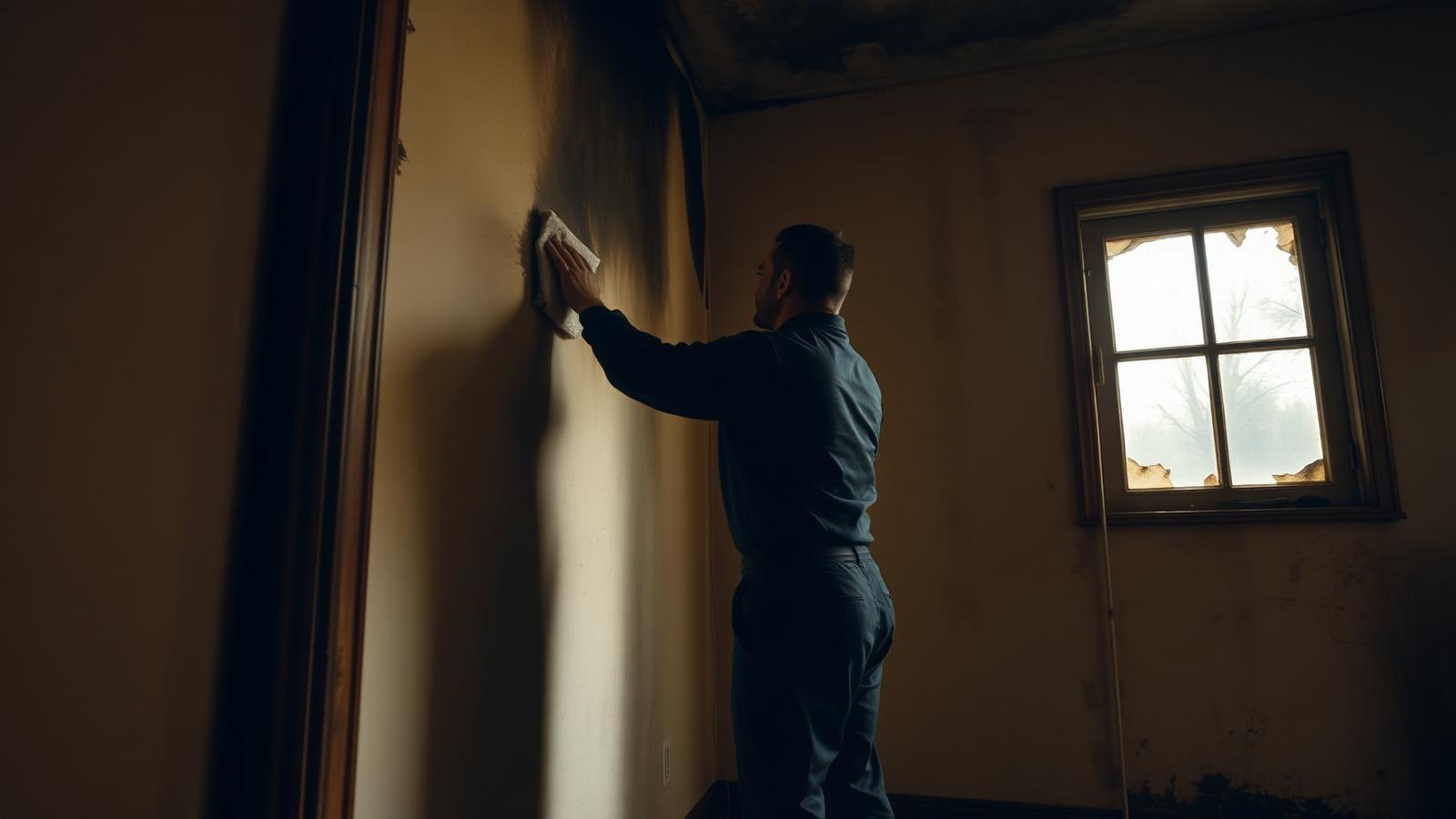
Smoke is a deposition problem and a chemistry problem. Combustion products are fine, they are charged, and they travel with air, which means they end up inside wall cavities, in HVAC ductwork, on the underside of shelving, behind outlet covers, and inside the electronics and textiles of rooms that never saw flame. Different fuels produce different residues, and the correct cleaning method depends on which residue you are looking at.
Protein residue from a kitchen fire is nearly invisible, greasy, and produces an intense odor that resists ordinary cleaning. Dry smoke from a fast, high-temperature fire produces a powdery residue that can often be dry-cleaned off with sponges before any wet method is used. Wet smoke from a smoldering, low-oxygen fire is sticky, dense, and smears if you attack it wet too early. Using the wrong method sets the residue permanently into the surface.
Odor is the last thing to be resolved and the reason most fire jobs fail. Odor lives in porous materials and in the parts of the building air touches but hands do not. Sealing framing, decontaminating ductwork, treating with hydroxyl or ozone where appropriate, and thermal fogging to reach the same voids the smoke reached are what actually remove it. Air freshener masks it for a week.
Warning signs
- A smoke smell that returns when the heat or air conditioning runs
- Yellow or brown staining bleeding through fresh paint
- Greasy film on walls, cabinet faces, and the top of door casings
- Blackened residue around vents, returns, and outlet covers
- Tarnished or pitted metal fixtures near the fire origin
- Textiles, drapes, and upholstery that hold odor after laundering
- Soot lines on the underside of shelves and horizontal surfaces
Residual smoke odor that intensifies with heat or humidity is the clearest sign that residue remains inside assemblies or ductwork. This is a diagnostic finding, not a nuisance. It means the affected volume was not fully treated, and repainting over it will not resolve it.
Our process in Napa
- Step 1Emergency securing and board-up
Openings get boarded, compromised roofs get tarped, and the site is secured against weather and entry. Where suppression water is present, extraction and drying start immediately, because a wet fire building becomes a mold building within days.
- Step 2Assessment and residue identification
We determine the fuel and burn characteristics, identify the residue type room by room, and map how far smoke traveled. This drives every cleaning decision that follows and is the step most often skipped.
- Step 3Contents evaluation and pack-out
Contents are triaged into salvageable, needs off-site cleaning, and non-salvageable. Items requiring specialized treatment are inventoried and packed out so the structure can be worked without stepping over them.
- Step 4Structural cleaning
Dry methods first where the residue calls for it, then appropriate wet cleaning with the correct chemistry for the residue type. Ceilings, walls, framing, and hard surfaces are cleaned from the top down so falling residue does not recontaminate finished work.
- Step 5HVAC decontamination
Ductwork is cleaned and, where necessary, sealed. Skipping this step guarantees odor recurrence, because the system will redistribute residue through the whole building the first time it cycles.
- Step 6Odor neutralization
Sealing of affected framing, thermal fogging to reach voids the smoke reached, and hydroxyl or ozone treatment where the situation and occupancy allow. Verification is done by smell testing under heat and humidity, not on a cool empty building.
- Step 7Reconstruction
Framing repair, insulation, drywall, texture, paint with the appropriate sealing primer, trim, flooring, and finishes. Same company, same accountability, no gap between the cleaning scope and the build scope.
Residential and commercial
In homes, the emotional weight of a fire is part of the job. We work to a schedule you understand, keep the property secured, protect what can be protected, and give you honest answers about what is coming back and what is not. Where the family is displaced, we coordinate around temporary housing timelines.
For commercial properties, downtime is the dominant cost. We prioritize the areas that get you operating again, phase the work so parts of the building can reopen while others are still being cleaned, and handle documentation for business interruption support. Restaurant and food service fires get particular attention on protein residue and duct systems.
Napa's commercial base is dominated by hospitality, food service, wine production and tasting facilities, retail in the downtown and Oxbow districts, healthcare, and professional services. Hospitality and wine industry properties operate on seasonal calendars where downtime during peak season is enormously costly, and where finish quality and discretion during occupied work are non-negotiable. We phase and schedule accordingly.
Local building stock and what it changes
Older neighborhoods near downtown include Victorian and early twentieth century homes with raised foundations, plaster interiors, and period detailing, plus a large mid-century stock through the central city.
Newer subdivisions on the north and east sides are conventional modern tract and semi-custom construction.
Hillside properties on both valley walls include larger custom homes with complex roofs, extensive glazing, and site drainage systems that require maintenance.
Timeline and response
Emergency securing happens the same day. Cleaning duration depends on square footage and residue type, and commonly runs one to three weeks for a residential floor. Odor treatment and verification add several days. Reconstruction is scoped separately and is usually the longest phase, driven by permitting where structural repair is involved and by material lead times.
Napa is a short drive from our Fairfield base. We plan for older assemblies in the historic neighborhoods, for occupied-property protocols in hospitality work, and for smoke-related scopes across the whole city during and after regional fire events.
Insurance and documentation
Fire losses are typically covered, and they are also the loss type where an itemized scope matters most. We provide room by room documentation, residue findings, contents inventory, and a clear separation between mitigation and reconstruction line items. We work with your adjuster directly at your request and we do not overstate a scope to inflate a claim.
What affects cost
- Size of the burn area and whether framing was structurally compromised
- Residue type, since protein and wet smoke are far more labor intensive than dry smoke
- Total square footage requiring cleaning, which is usually much larger than the burn area
- Volume of contents requiring cleaning or pack-out
- Whether suppression water created a concurrent water and drying scope
- Extent of reconstruction and finish level being restored
Preventing a repeat
- Clean dryer vents and kitchen hood filters on a set schedule
- Replace smoke alarms every ten years and test them monthly
- Have older electrical panels evaluated, particularly in pre-1980 construction
- Keep a working extinguisher in the kitchen and know how to use it
- During heavy regional smoke, run HVAC on recirculate with a high-efficiency filter
Keep exploring
Answers to common questions
Fire and Smoke Damage in Napa, done right
We perform the work ourselves, we document it for your carrier, and we tell you plainly what does and does not need to be done. Trusted since 2005.