
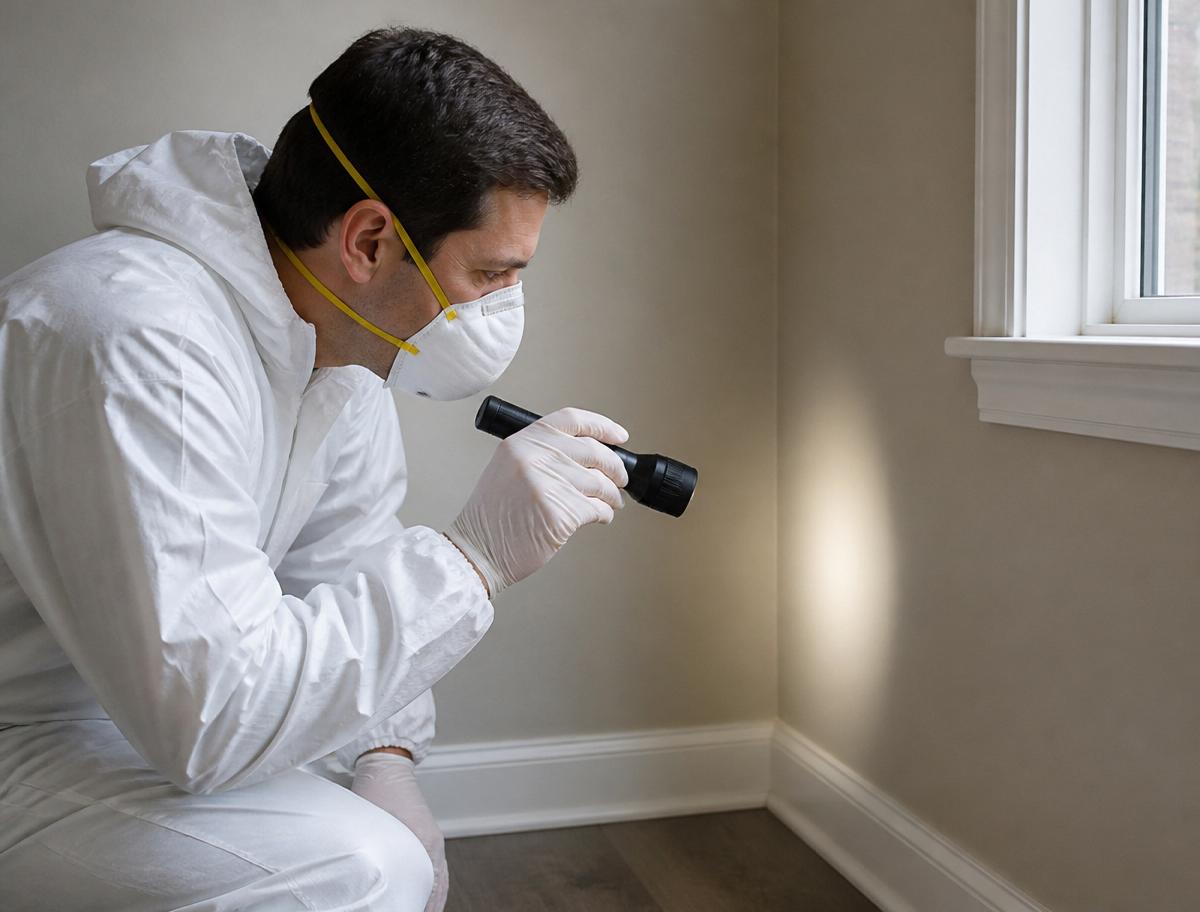
Mold Remediation in Green Valley, CA
Containment, safe removal, and correction of the moisture source. Performed directly by our own crews for Green Valley homes and businesses.
Mold Remediation in Green Valley is shaped by conditions that do not apply evenly across Solano County. Mold here is typically the result of runoff intrusion or roof leaks that went unaddressed on a large property where the affected room is not used daily. Crawlspaces on hillside parcels can hold water from uphill seepage, and older detached structures and guest units frequently have ventilation and drainage deficiencies that produce persistent moisture. The size of these properties works against early detection, which is the recurring theme.
The building stock matters as much as the weather. Green Valley includes larger custom homes on acreage, established mid-century properties, and newer development associated with the country club area, so construction era and quality vary widely from parcel to parcel. That construction profile changes what we expect to find once an assembly is opened, and it changes the sequence of the work rather than just the paperwork on it.
The valley is enclosed by hills on both sides and drains south through Green Valley Creek toward Cordelia and the slough. That containment means runoff concentrates rather than spreading, and creek-adjacent parcels experience the consequences during intense rainfall. For mold remediation specifically, that geography determines both how a loss develops and how quickly a building recovers once mitigation begins.
Green Valley is a short drive from our Fairfield base, though access on rural parcels and during storm conditions takes planning. We assess large properties systematically rather than only where the symptom appeared, because on acreage the source and the symptom are often in different buildings.
Commercial activity includes vineyard and agricultural operations, the country club and its facilities, and small businesses along Green Valley Road, along with the business parks at the valley's southern end near Cordelia. Agricultural and hospitality properties have seasonal timing constraints that shape when disruptive work can happen.
Why Green Valley properties see this loss
The valley is enclosed by hills on both sides and drains south through Green Valley Creek toward Cordelia and the slough. That containment means runoff concentrates rather than spreading, and creek-adjacent parcels experience the consequences during intense rainfall.
Elevation and slope vary considerably. Hillside parcels have their own drainage, often relying on engineered swales, culverts, and site grading that require maintenance to keep functioning.
The surrounding hills are grassland and oak woodland, which is classic wildland urban interface, and the valley's orientation channels wind along its axis during storm events.
Unresolved water losses are the leading cause. A leak that was mopped up and left to dry on its own leaves framing, insulation, and subfloor wet, and those materials hold moisture for weeks in an enclosed cavity.
Chronic low-grade moisture creates the slowest and most widespread problems. Failing window seals, a slab without a functioning vapor barrier, a crawlspace with standing water, or a bathroom without working ventilation produce conditions that never dry out and never announce themselves.
Condensation from HVAC and building envelope issues drives mold in ways owners rarely suspect, particularly on air handler cabinets, supply registers, uninsulated ducts in unconditioned attics, and interior faces of poorly insulated exterior walls.
What the work involves
Proper remediation starts with containment. Disturbing mold releases spores, and a job done without containment spreads a localized problem through the whole building. Containment means physical barriers, negative air pressure inside the work area, HEPA filtration scrubbing the air, and controlled entry and exit so spores do not ride out on foot traffic.
Removal follows containment. Porous materials with growth through them, such as drywall, insulation, carpet pad, and particle board, come out rather than getting cleaned, because cleaning the face of a porous material does nothing about what is inside it. Semi-porous and non-porous materials such as framing, concrete, and metal can usually be cleaned and treated in place using HEPA vacuuming, wire brushing or sanding where appropriate, and antimicrobial application.
The final phase is drying and verification. The affected assembly is dried to standard, the containment is cleaned, air scrubbing continues through the final cleaning, and post-remediation verification confirms conditions before the area is rebuilt. Then, and only then, the moisture source correction is confirmed as complete.
Warning signs
- A persistent musty or earthy odor with no visible source
- Visible growth on drywall, framing, grout, or the back of baseboard
- Discoloration that returns after cleaning or repainting
- Condensation on windows, ducts, or interior walls in cool weather
- Allergy or respiratory symptoms that improve when occupants leave the building
- Warped or bulging drywall and soft spots at the base of walls
- Any known past water event that was dried informally or not at all
Odor without visible growth is common and it is not a reason to wait. Growth in a wall cavity, under flooring, or behind cabinetry produces smell long before anything appears on a painted surface, and by the time it is visible the affected area is generally well established.
Our process in Green Valley
- Step 1Inspection and moisture investigation
We find the water before we touch the mold. Moisture meters, thermal imaging, and inspection of the likely paths establish where the water is coming from and how far the affected area extends.
- Step 2Containment setup
Physical barriers, sealed openings, negative air machines with HEPA filtration, and a controlled entry establish a work area that will not contaminate the rest of the building.
- Step 3Air filtration
HEPA air scrubbers run throughout the work, capturing airborne spores released during removal and maintaining the pressure differential that keeps the containment working.
- Step 4Removal of affected materials
Porous materials with growth are cut out to a defined boundary beyond the visible edge, bagged inside containment, and removed through the controlled exit rather than carried through the building.
- Step 5Cleaning and antimicrobial treatment
Remaining framing and non-porous surfaces are HEPA vacuumed, cleaned, treated with an appropriate antimicrobial, and where called for sealed. Adjacent surfaces inside containment get the same treatment.
- Step 6Drying and moisture source correction
The assembly is dried to standard and the source is corrected, whether that means a plumbing repair, flashing correction, drainage change, ventilation improvement, or vapor barrier work. Skipping this is the single most common reason mold returns.
- Step 7Verification and rebuild
Conditions are verified before containment comes down, then insulation, drywall, texture, paint, trim, and flooring go back in.
Residential and commercial
In homes, occupant health and disruption are the drivers. We contain tightly, schedule around occupancy where the affected area allows it, discuss when temporary relocation is genuinely warranted, and handle bathrooms, laundry areas, crawlspaces, and attics, which is where most residential growth lives.
In commercial buildings, mold quickly becomes a tenant relations and liability question. We work after hours where needed, keep containment presentable in occupied buildings, document the scope and verification for property management and legal records, and coordinate with facility staff on HVAC operation during the work.
Commercial activity includes vineyard and agricultural operations, the country club and its facilities, and small businesses along Green Valley Road, along with the business parks at the valley's southern end near Cordelia. Agricultural and hospitality properties have seasonal timing constraints that shape when disruptive work can happen.
Local building stock and what it changes
Green Valley includes larger custom homes on acreage, established mid-century properties, and newer development associated with the country club area, so construction era and quality vary widely from parcel to parcel.
Many properties have well and septic systems, detached structures, guest units, barns, and outbuildings, all of which expand the scope of a typical loss beyond the primary residence.
Larger homes often have complex roof geometry with multiple valleys, dormers, and transitions, and those transitions are where wind-driven rain finds its way in.
Timeline and response
A small contained area, such as a single bathroom wall, is often a two to four day job including drying. Larger areas or multiple rooms run one to two weeks. Crawlspace and attic remediation depends heavily on access. Moisture source correction can add time when it involves roofing, plumbing, or drainage work, and reconstruction is scheduled after verification.
Green Valley is a short drive from our Fairfield base, though access on rural parcels and during storm conditions takes planning. We assess large properties systematically rather than only where the symptom appeared, because on acreage the source and the symptom are often in different buildings.
Insurance and documentation
Mold coverage varies widely by policy and is frequently limited or capped, especially where the underlying moisture was long-term rather than sudden. Where mold results directly from a covered water loss, coverage is more common. We document the moisture source, the affected area, the removal scope, and verification, and we are straightforward with you about what is likely to be a covered line and what is likely to be out of pocket.
What affects cost
- Square footage of affected material and number of separate containment areas
- Accessibility, since crawlspaces and attics take significantly more labor
- Whether framing can be cleaned in place or requires replacement
- The nature of the moisture source correction required
- Whether contents need cleaning or disposal
- Reconstruction scope after verification
Preventing a repeat
- Run bathroom exhaust fans during and for twenty minutes after every shower
- Keep interior relative humidity below sixty percent, and below fifty where possible
- Address any water event within twenty four to forty eight hours, always
- Inspect crawlspaces annually for standing water, wet insulation, and vapor barrier gaps
- Insulate ducts and cold water lines that run through unconditioned space
Keep exploring
Answers to common questions
Mold Remediation in Green Valley, done right
We perform the work ourselves, we document it for your carrier, and we tell you plainly what does and does not need to be done. Trusted since 2005.