
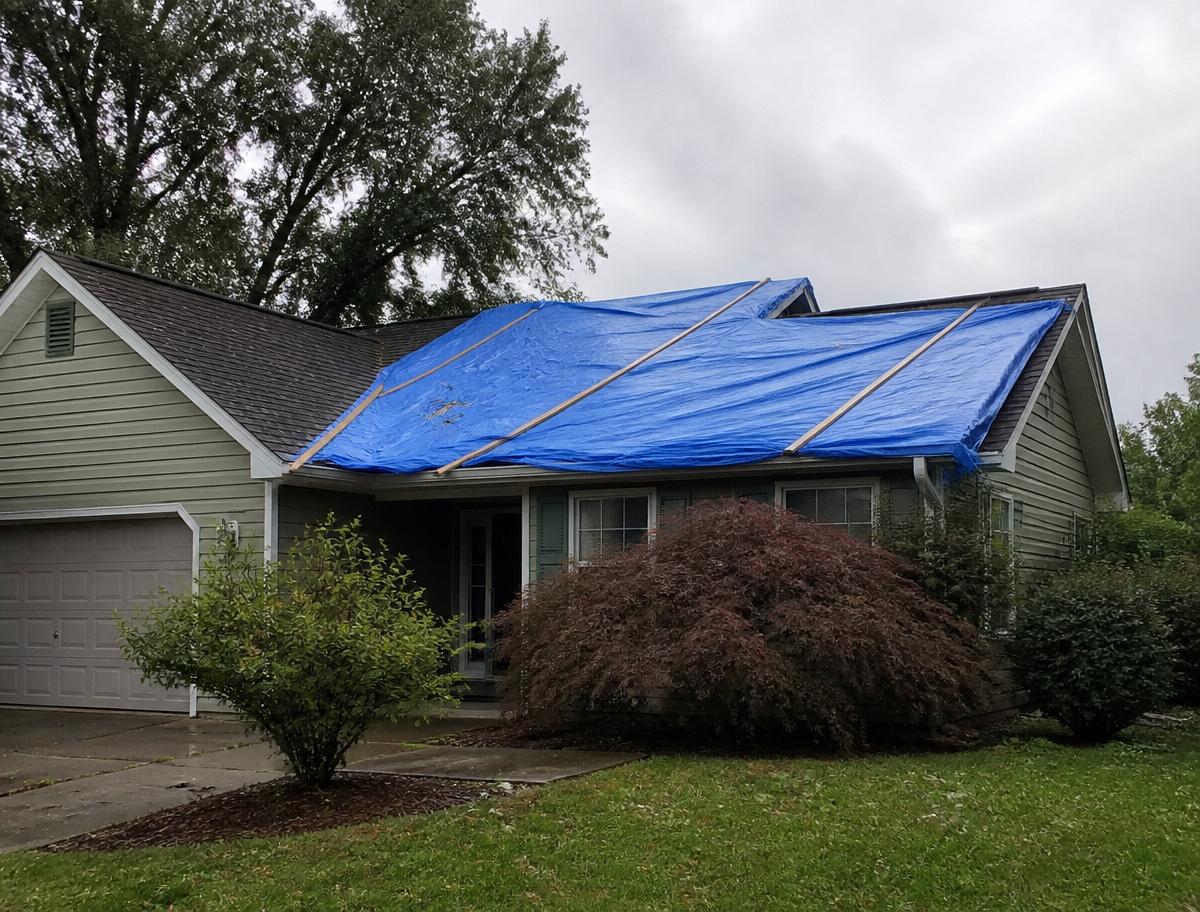
Storm Damage Cleanup in Vallejo, CA
Emergency board-up, roof tarping, water intrusion control, and restoration. Performed directly by our own crews for Vallejo homes and businesses.
Storm Damage Cleanup in Vallejo is shaped by conditions that do not apply evenly across Solano County. Wind off the strait and the bay is the primary storm factor, and it is sustained rather than occasional. Historic roofing, aging fascia and soffit, and mature trees in old neighborhoods all take loading. Hillside runoff during heavy rain adds intrusion risk, and older storm drainage infrastructure limits how much water the system can handle before it backs up onto property.
The building stock matters as much as the weather. Vallejo has a large stock of genuinely historic housing, including Victorian and early twentieth century homes in the Heritage District and surrounding neighborhoods. These properties have raised foundations, original wood construction, lath and plaster walls, and complex layered repair histories. That construction profile changes what we expect to find once an assembly is opened, and it changes the sequence of the work rather than just the paperwork on it.
Vallejo sits on hills rising from the Carquinez Strait and the Napa River, with substantial elevation change across the city and a long waterfront. Marine influence is strong, producing cool, humid conditions and frequent fog, particularly on the west side. For storm damage cleanup specifically, that geography determines both how a loss develops and how quickly a building recovers once mitigation begins.
Vallejo is a short run down Interstate 80 from our base. We plan for older assemblies, plaster rather than drywall, crawlspace involvement, and the likelihood that opening a wall reveals prior repairs nobody documented. That expectation is why our Vallejo scopes hold up better than estimates written from photographs.
Vallejo's commercial base includes the waterfront and ferry terminal area, downtown and historic commercial buildings, Mare Island's mixed industrial and commercial redevelopment, and retail corridors along the main arterials. Historic commercial buildings present the same concealed-condition challenges as historic housing, at larger scale and with tenant occupancy to work around.
Why Vallejo properties see this loss
Vallejo sits on hills rising from the Carquinez Strait and the Napa River, with substantial elevation change across the city and a long waterfront. Marine influence is strong, producing cool, humid conditions and frequent fog, particularly on the west side.
The hillside terrain concentrates runoff during heavy rain, and older neighborhoods have drainage infrastructure that predates modern standards.
Wind through the Carquinez Strait is significant and constant, affecting exposed western and southern elevations year round.
Atmospheric river events deliver most of the annual rainfall for this region in a small number of days, and the volume is what overwhelms gutters, area drains, and roof details that handle ordinary rain without difficulty.
Delta wind is a persistent local factor. Sustained wind through the Suisun and Carquinez corridors works at roof edges, ridge caps, fencing, and anything with a loose fastener, and it drives rain horizontally into assemblies designed for water falling straight down.
Saturated ground after successive storms produces the second wave of problems, including drainage failures, slope movement on hillside parcels, water finding its way into crawlspaces and garages, and trees coming down in wind that they would have withstood in dry soil.
What the work involves
Storm response begins with making the building safe and closed. That means tarping compromised roof areas, boarding broken windows and openings, removing hazardous debris, and identifying structural elements that have been compromised by wind, impact, or saturation.
Water intrusion mitigation runs in parallel. Wind-driven rain enters through roof breaches, failed flashing, window and door assemblies, and wall penetrations, and it soaks insulation and framing on the way in. The drying scope for a storm loss is frequently larger than the visible damage suggests, because the water traveled inside the assembly before it appeared on a ceiling.
Restoration follows stabilization and drying. That includes roof and envelope repair, framing and sheathing replacement, insulation, drywall, and interior finishes, along with exterior elements such as fencing, siding, and soffit that took wind damage.
Warning signs
- New ceiling stains appearing after a heavy rain event
- Missing, lifted, or displaced roof shingles and tiles
- Granule accumulation at downspout outlets
- Damaged or detached gutters, fascia, and soffit
- Water pooling near the foundation or against exterior walls
- Interior drafts, whistling, or daylight visible at window and door frames
- Fence sections, siding panels, or trim displaced by wind
The most expensive storm damage is the kind that only shows up during the next storm. A compromised flashing detail or a lifted shingle course lets in water only under specific wind and rain conditions, which is why post-storm inspection should include the attic and not just the roof surface and the ceiling below it.
Our process in Vallejo
- Step 1Emergency response and hazard assessment
We assess for structural hazards, electrical exposure, and unsafe access before work begins, then establish what has to be stabilized immediately versus what can be scheduled.
- Step 2Board-up and tarping
Broken openings are secured, and compromised roof areas are covered with tarping installed to withstand continued weather rather than a single dry afternoon. This is what stops the loss from growing.
- Step 3Debris removal
Hazardous and obstructing debris is cleared so the property is safe and the damage is fully visible. Concealed damage under debris is common and it is documented at this stage.
- Step 4Water extraction and drying
Intruded water is extracted, wet insulation is removed, and structural drying is set with daily monitoring. Attic and wall cavity moisture gets particular attention on wind-driven rain events.
- Step 5Damage documentation
Photographs, measurements, moisture readings, and a written scope are compiled while the damage is still exposed, which is when a storm claim is easiest to substantiate.
- Step 6Structural repair
Roof decking, framing, sheathing, flashing, and envelope repairs are made so the building is weather-tight before interior work resumes.
- Step 7Interior restoration
Insulation, drywall, texture, paint, trim, and flooring are restored, along with exterior finishes, fencing, and site elements affected by the event.
Residential and commercial
For homes, we prioritize keeping the structure closed and the occupants safe, then work through drying and restoration on a schedule you can plan around. Fencing, exterior trim, and detached structures are included in the scope where they were affected.
For commercial properties, we address the elements that keep the building operating and compliant first, coordinate with property management on access and tenant communication, and phase repairs so occupied areas stay usable. Flat roof systems, parapet details, and rooftop equipment get specific attention.
Vallejo's commercial base includes the waterfront and ferry terminal area, downtown and historic commercial buildings, Mare Island's mixed industrial and commercial redevelopment, and retail corridors along the main arterials. Historic commercial buildings present the same concealed-condition challenges as historic housing, at larger scale and with tenant occupancy to work around.
Local building stock and what it changes
Vallejo has a large stock of genuinely historic housing, including Victorian and early twentieth century homes in the Heritage District and surrounding neighborhoods. These properties have raised foundations, original wood construction, lath and plaster walls, and complex layered repair histories.
Mid-century housing associated with Mare Island and postwar growth fills large parts of the city, with the aging plumbing, electrical, and ventilation issues typical of that era.
Newer development on the north and east sides follows conventional tract patterns. The result is a city where the correct restoration approach varies dramatically by neighborhood.
Timeline and response
Emergency stabilization is same day wherever access allows. Drying runs the usual three to eight days depending on saturation. Structural and roofing repair timelines depend on scope, permitting, and material availability, and during regional events material lead times are the main constraint. We keep you updated as the schedule firms up.
Vallejo is a short run down Interstate 80 from our base. We plan for older assemblies, plaster rather than drywall, crawlspace involvement, and the likelihood that opening a wall reveals prior repairs nobody documented. That expectation is why our Vallejo scopes hold up better than estimates written from photographs.
Insurance and documentation
Storm losses are typically covered, though policies differ on wind, water intrusion, and flood, and flood is generally a separate policy entirely. Documentation taken while damage is still exposed makes the difference in these claims. We photograph and measure before covering anything and we provide a scope your adjuster can work from directly.
What affects cost
- Extent of roof and envelope damage and whether decking is compromised
- Volume of water intrusion and number of affected assemblies
- Debris quantity and disposal requirements
- Structural repair requirements and permitting
- Exterior elements affected, including fencing, siding, and detached structures
- Material availability during regional weather events
Preventing a repeat
- Clear gutters and downspouts before the first significant storm of the season
- Have roof flashing, ridge caps, and penetrations inspected annually
- Trim trees away from structures and remove dead limbs before wind season
- Confirm site drainage moves water away from the foundation
- Check attic ventilation openings for wind-driven rain entry points
Keep exploring
Answers to common questions
Storm Damage Cleanup in Vallejo, done right
We perform the work ourselves, we document it for your carrier, and we tell you plainly what does and does not need to be done. Trusted since 2005.