
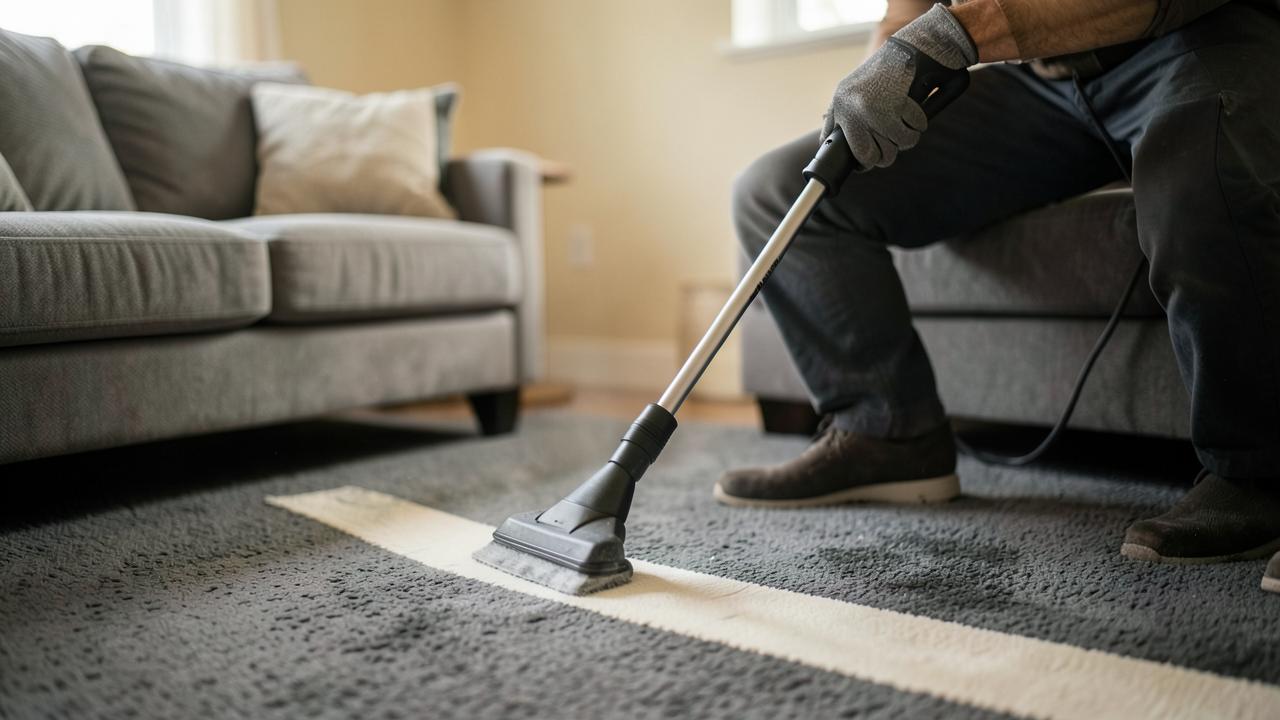
Carpet and Upholstery Cleaning in Calistoga, CA
Deep extraction cleaning for carpet, rugs, and upholstered furnishings. Performed directly by our own crews for Calistoga homes and businesses.
Carpet and Upholstery Cleaning in Calistoga is shaped by conditions that do not apply evenly across Napa County. Hospitality properties carry the highest mold pressure, driven by guest bathrooms in continuous use, spa and pool facilities with high humidity loads, and treatment rooms designed around steam and water. Geothermal ground moisture in certain areas adds a factor found nowhere else in our territory. Historic residential buildings contribute the usual crawlspace and plaster moisture issues.
The building stock matters as much as the weather. The historic downtown and surrounding residential district include late nineteenth and early twentieth century buildings with original wood construction, raised foundations, and period materials. That construction profile changes what we expect to find once an assembly is opened, and it changes the sequence of the work rather than just the paperwork on it.
Calistoga occupies the narrow upper end of the Napa Valley, enclosed by the Mayacamas Mountains to the west and the Vaca Range to the east, with Mount Saint Helena at the head of the valley. For carpet & upholstery cleaning specifically, that geography determines both how a loss develops and how quickly a building recovers once mitigation begins.
Calistoga is the most distant part of our service area, so we plan mobilization with the full anticipated scope in mind rather than making repeat trips for equipment. For hospitality properties we phase work to keep rooms and public areas in service wherever the scope allows.
Calistoga's economy is hospitality, spa and resort operations, wineries and tasting rooms, and the downtown retail and restaurant district. These properties operate on seasonal revenue cycles where losing rooms or a tasting room during peak season is severe. Work has to be phased, discreet, and finished to a standard the guest experience depends on.
Why Calistoga properties see this loss
Calistoga occupies the narrow upper end of the Napa Valley, enclosed by the Mayacamas Mountains to the west and the Vaca Range to the east, with Mount Saint Helena at the head of the valley.
The valley narrows here, which means marine moderation from San Pablo Bay is weakest and summer temperatures are the highest in the valley. Winters are cool with substantial rainfall running off the surrounding mountains.
Geothermal activity is a genuine local feature, producing hot springs and elevated ground moisture and heat in certain areas, which affects building assemblies in ways that do not occur elsewhere in our territory.
Ordinary soil load is mostly tracked-in particulate, which is abrasive and cuts carpet fiber over time. This is why regular vacuuming does more for carpet lifespan than periodic deep cleaning.
Spills and pet accidents penetrate into pad and subfloor, where they support odor and microbial growth long after the surface looks clean.
Post-loss contamination, including smoke residue, elevated humidity from a water event, and construction dust from an adjacent rebuild, all leave soil that ordinary maintenance cleaning is not formulated to address.
What the work involves
Effective carpet cleaning is mostly about soil removal and water management. Dry soil removal comes first, since vacuuming lifts a large share of particulate before any moisture is introduced, and introducing water to dry soil turns it into mud that migrates into the backing. Pre-treatment follows, matched to the soil and the fiber, with adequate dwell time.
Hot water extraction, commonly called steam cleaning, is the primary method for most synthetic carpet. The variables that determine whether it works are solution temperature, pressure, extraction passes, and how much moisture is left behind. Over-wetting is the single most common failure, because a carpet that stays damp for more than a day develops odor and can wick stains back up from the pad.
Upholstery requires more care than carpet, because fabric, filling, and frame all respond differently to moisture. Fiber identification matters more, low-moisture methods are frequently the right choice, and drying has to be accelerated deliberately to avoid water rings, shrinkage, and frame staining bleeding through.
Warning signs
- Traffic lanes that stay visibly darker after vacuuming
- Carpet that feels stiff or crunchy underfoot from residue buildup
- Odor that returns as soon as humidity rises
- Spots that reappear days after being cleaned, which indicates wicking from the pad
- Upholstery with visible soil on arms and headrests
- Increased allergy symptoms in carpeted rooms
Spots that keep reappearing are the diagnostic sign worth understanding. It means the contaminant reached the pad or the cushion and is wicking back up as the material dries. Surface cleaning will never resolve it. The pad or fill has to be addressed directly.
Our process in Calistoga
- Step 1Inspection and fiber identification
We identify fiber type, backing, construction, and soil condition, and note any pre-existing damage or permanent staining before starting.
- Step 2Dry soil removal
Thorough vacuuming removes particulate before moisture is introduced. This step does more for the final result than any single chemical choice.
- Step 3Pre-treatment and agitation
Pre-spray matched to the soil and fiber is applied and given dwell time, with mechanical agitation where the carpet construction allows it.
- Step 4Spot and stain treatment
Specific stains are treated individually with the appropriate chemistry, since a single general solution does not address protein, tannin, oil, and dye stains equally.
- Step 5Hot water extraction
Cleaning solution is injected and immediately extracted with multiple passes, removing soil and as much moisture as possible in the same operation.
- Step 6Grooming and controlled drying
Pile is groomed to set the fiber, and air movers accelerate drying to keep the material from staying damp long enough to develop odor or wick.
- Step 7Post-cleaning inspection
We walk the work with you, address anything missed, and tell you honestly which marks are permanent damage rather than soil.
Residential and commercial
For homes, we work room by room, move and replace reasonable furniture, protect hard flooring and door casings, and set airflow so the space is usable the same day. Pet-affected areas are assessed for pad contamination rather than treated as a surface problem.
For commercial spaces, we schedule around operating hours, work in zones so areas can stay open, and use methods with faster dry times where downtime matters. Regular maintenance schedules are available for offices, retail, and multi-tenant properties where appearance is part of the business.
Calistoga's economy is hospitality, spa and resort operations, wineries and tasting rooms, and the downtown retail and restaurant district. These properties operate on seasonal revenue cycles where losing rooms or a tasting room during peak season is severe. Work has to be phased, discreet, and finished to a standard the guest experience depends on.
Local building stock and what it changes
The historic downtown and surrounding residential district include late nineteenth and early twentieth century buildings with original wood construction, raised foundations, and period materials.
Resort and spa properties represent a significant share of the built environment, with guest accommodations, treatment facilities, pools, and extensive plumbing systems.
Hillside and rural properties on the valley walls include custom homes, wineries, and agricultural structures on parcels with well and septic systems and private access roads.
Timeline and response
Most residential jobs are completed in a few hours, with carpet dry to the touch within four to eight hours depending on airflow and humidity. Upholstery is generally same day. Post-loss cleaning takes longer because pre-treatment and multiple passes are usually required.
Calistoga is the most distant part of our service area, so we plan mobilization with the full anticipated scope in mind rather than making repeat trips for equipment. For hospitality properties we phase work to keep rooms and public areas in service wherever the scope allows.
Insurance and documentation
Routine cleaning is a maintenance expense rather than a claim item. Cleaning performed as part of a covered loss, such as smoke residue removal or post-water-event cleaning, is typically part of the loss scope. We separate maintenance work from loss-related work clearly in our documentation so there is no ambiguity.
What affects cost
- Square footage and number of rooms or upholstered pieces
- Fiber type and construction, since wool and natural fibers require different handling
- Soil level and whether specialty spot treatment is required
- Whether pad contamination has to be addressed
- Furniture moving requirements
- Scheduling constraints in commercial spaces
Preventing a repeat
- Vacuum high-traffic areas at least twice a week, slowly, with multiple passes
- Use walk-off mats at every exterior entry to capture particulate
- Blot spills immediately rather than rubbing, which drives contaminant into the backing
- Rotate and clean upholstery cushions periodically for even wear
- Schedule professional cleaning every twelve to eighteen months for typical households
Keep exploring
Answers to common questions
Carpet & Upholstery Cleaning in Calistoga, done right
We perform the work ourselves, we document it for your carrier, and we tell you plainly what does and does not need to be done. Trusted since 2005.