
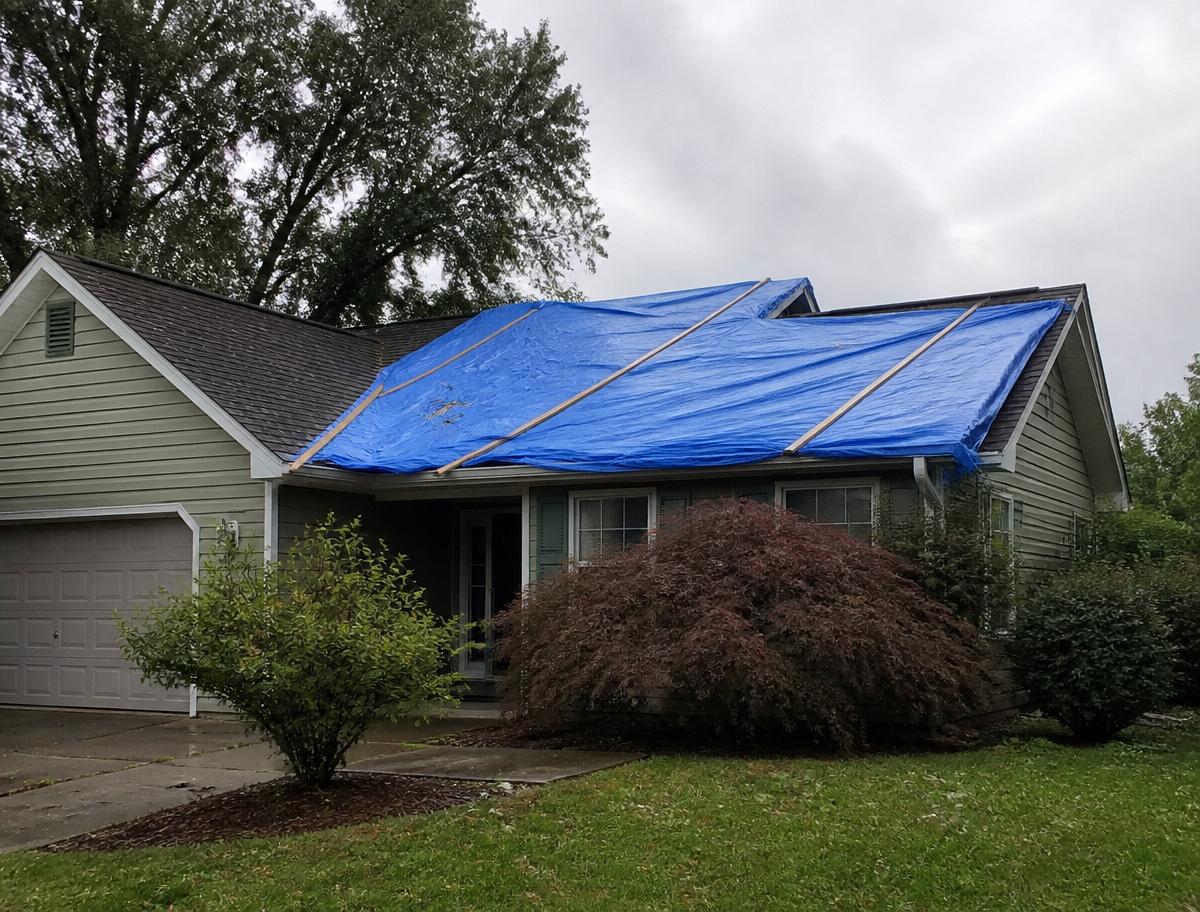
Storm Damage Cleanup in Fairfield, CA
Emergency board-up, roof tarping, water intrusion control, and restoration. Performed directly by our own crews for Fairfield homes and businesses.
Storm Damage Cleanup in Fairfield is shaped by conditions that do not apply evenly across Solano County. Winter storms in Fairfield combine sustained wind with intense but compressed rainfall. The wind component is the part people underestimate. Delta wind works at roof edges, ridge caps, and fencing continuously, and by the time a strong system arrives, marginal roof details have already been loosened. Rain then arrives horizontally and finds those details. Add ground saturated from prior storms and you get the second tier of problems, including drainage backing up against foundations, water entering garages and crawlspaces, and trees failing in soil that no longer holds their root plates.
The building stock matters as much as the weather. Central Fairfield includes a substantial stock of mid-century homes built between the 1950s and 1970s, much of it tied to Travis Air Force Base growth. These homes commonly have original cast iron or galvanized drain lines nearing the end of their service life, slab-on-grade construction with copper supply lines that develop pinhole leaks, single-pane or early dual-pane windows with failing seals, and minimal attic insulation by current standards. That construction profile changes what we expect to find once an assembly is opened, and it changes the sequence of the work rather than just the paperwork on it.
Fairfield sits in the Suisun Valley basin, bounded by the Vaca Mountains to the north and west and the Suisun Marsh to the south. That position produces the single most defining local weather feature, the Delta breeze, which funnels marine air inland through the Carquinez and Suisun gaps almost every summer afternoon and drives sustained wind through winter storm systems. For storm damage cleanup specifically, that geography determines both how a loss develops and how quickly a building recovers once mitigation begins.
Fairfield is where our crews and equipment are based, which means the shortest mobilization time we offer anywhere. Interstate 80 and Highway 12 give us direct access to nearly every part of the city, and we know which neighborhoods have access constraints, which have older infrastructure, and which sit low enough that storm season deserves a proactive look.
Fairfield's commercial base includes the Solano Town Center retail corridor, the Green Valley and Cordelia business parks, food and beverage manufacturing including the well-known operations off Highway 12, medical and professional offices, and a substantial hospitality cluster serving Interstate 80 traffic. Each has its own restoration priority. Retail cares about reopening floor area, food production cares about contamination control and documentation, offices care about records and workstations, and hospitality cares about getting rooms back in inventory. We phase commercial work around whichever of those drives the loss.
Why Fairfield properties see this loss
Fairfield sits in the Suisun Valley basin, bounded by the Vaca Mountains to the north and west and the Suisun Marsh to the south. That position produces the single most defining local weather feature, the Delta breeze, which funnels marine air inland through the Carquinez and Suisun gaps almost every summer afternoon and drives sustained wind through winter storm systems.
The city drains toward Suisun Slough through a network of creeks including Ledgewood Creek, Laurel Creek, and Union Avenue drainage channels. In an ordinary rain year those channels handle runoff without incident. In an atmospheric river event, where several inches fall in a day onto ground already saturated from the previous storm, low-lying areas near those channels and older neighborhoods with undersized storm drains see water where it does not normally go.
Elevation varies more than people expect for a valley city, from near sea level at the marsh edge to several hundred feet in the foothill neighborhoods on the northwest side. That range means two properties a few miles apart can face completely different water intrusion and wildfire exposure profiles.
Atmospheric river events deliver most of the annual rainfall for this region in a small number of days, and the volume is what overwhelms gutters, area drains, and roof details that handle ordinary rain without difficulty.
Delta wind is a persistent local factor. Sustained wind through the Suisun and Carquinez corridors works at roof edges, ridge caps, fencing, and anything with a loose fastener, and it drives rain horizontally into assemblies designed for water falling straight down.
Saturated ground after successive storms produces the second wave of problems, including drainage failures, slope movement on hillside parcels, water finding its way into crawlspaces and garages, and trees coming down in wind that they would have withstood in dry soil.
What the work involves
Storm response begins with making the building safe and closed. That means tarping compromised roof areas, boarding broken windows and openings, removing hazardous debris, and identifying structural elements that have been compromised by wind, impact, or saturation.
Water intrusion mitigation runs in parallel. Wind-driven rain enters through roof breaches, failed flashing, window and door assemblies, and wall penetrations, and it soaks insulation and framing on the way in. The drying scope for a storm loss is frequently larger than the visible damage suggests, because the water traveled inside the assembly before it appeared on a ceiling.
Restoration follows stabilization and drying. That includes roof and envelope repair, framing and sheathing replacement, insulation, drywall, and interior finishes, along with exterior elements such as fencing, siding, and soffit that took wind damage.
Warning signs
- New ceiling stains appearing after a heavy rain event
- Missing, lifted, or displaced roof shingles and tiles
- Granule accumulation at downspout outlets
- Damaged or detached gutters, fascia, and soffit
- Water pooling near the foundation or against exterior walls
- Interior drafts, whistling, or daylight visible at window and door frames
- Fence sections, siding panels, or trim displaced by wind
The most expensive storm damage is the kind that only shows up during the next storm. A compromised flashing detail or a lifted shingle course lets in water only under specific wind and rain conditions, which is why post-storm inspection should include the attic and not just the roof surface and the ceiling below it.
Our process in Fairfield
- Step 1Emergency response and hazard assessment
We assess for structural hazards, electrical exposure, and unsafe access before work begins, then establish what has to be stabilized immediately versus what can be scheduled.
- Step 2Board-up and tarping
Broken openings are secured, and compromised roof areas are covered with tarping installed to withstand continued weather rather than a single dry afternoon. This is what stops the loss from growing.
- Step 3Debris removal
Hazardous and obstructing debris is cleared so the property is safe and the damage is fully visible. Concealed damage under debris is common and it is documented at this stage.
- Step 4Water extraction and drying
Intruded water is extracted, wet insulation is removed, and structural drying is set with daily monitoring. Attic and wall cavity moisture gets particular attention on wind-driven rain events.
- Step 5Damage documentation
Photographs, measurements, moisture readings, and a written scope are compiled while the damage is still exposed, which is when a storm claim is easiest to substantiate.
- Step 6Structural repair
Roof decking, framing, sheathing, flashing, and envelope repairs are made so the building is weather-tight before interior work resumes.
- Step 7Interior restoration
Insulation, drywall, texture, paint, trim, and flooring are restored, along with exterior finishes, fencing, and site elements affected by the event.
Residential and commercial
For homes, we prioritize keeping the structure closed and the occupants safe, then work through drying and restoration on a schedule you can plan around. Fencing, exterior trim, and detached structures are included in the scope where they were affected.
For commercial properties, we address the elements that keep the building operating and compliant first, coordinate with property management on access and tenant communication, and phase repairs so occupied areas stay usable. Flat roof systems, parapet details, and rooftop equipment get specific attention.
Fairfield's commercial base includes the Solano Town Center retail corridor, the Green Valley and Cordelia business parks, food and beverage manufacturing including the well-known operations off Highway 12, medical and professional offices, and a substantial hospitality cluster serving Interstate 80 traffic. Each has its own restoration priority. Retail cares about reopening floor area, food production cares about contamination control and documentation, offices care about records and workstations, and hospitality cares about getting rooms back in inventory. We phase commercial work around whichever of those drives the loss.
Local building stock and what it changes
Central Fairfield includes a substantial stock of mid-century homes built between the 1950s and 1970s, much of it tied to Travis Air Force Base growth. These homes commonly have original cast iron or galvanized drain lines nearing the end of their service life, slab-on-grade construction with copper supply lines that develop pinhole leaks, single-pane or early dual-pane windows with failing seals, and minimal attic insulation by current standards.
The 1980s through early 2000s expansion produced large tract neighborhoods on the north and east sides. These homes tend to have two-story layouts with upstairs laundry rooms and bathrooms, which is the specific configuration that turns a supply line failure into a two-floor loss, and they frequently have builder-grade angle stops and washing machine hoses that were never replaced.
Newer construction in Fairfield is tighter and better insulated, which is good for energy performance and creates a different moisture profile. A tight building that gets wet dries more slowly without mechanical intervention, and interior humidity from ordinary occupancy has fewer paths out, so bathroom ventilation performance matters far more than it did in a leaky 1960s house.
Timeline and response
Emergency stabilization is same day wherever access allows. Drying runs the usual three to eight days depending on saturation. Structural and roofing repair timelines depend on scope, permitting, and material availability, and during regional events material lead times are the main constraint. We keep you updated as the schedule firms up.
Fairfield is where our crews and equipment are based, which means the shortest mobilization time we offer anywhere. Interstate 80 and Highway 12 give us direct access to nearly every part of the city, and we know which neighborhoods have access constraints, which have older infrastructure, and which sit low enough that storm season deserves a proactive look.
Insurance and documentation
Storm losses are typically covered, though policies differ on wind, water intrusion, and flood, and flood is generally a separate policy entirely. Documentation taken while damage is still exposed makes the difference in these claims. We photograph and measure before covering anything and we provide a scope your adjuster can work from directly.
What affects cost
- Extent of roof and envelope damage and whether decking is compromised
- Volume of water intrusion and number of affected assemblies
- Debris quantity and disposal requirements
- Structural repair requirements and permitting
- Exterior elements affected, including fencing, siding, and detached structures
- Material availability during regional weather events
Preventing a repeat
- Clear gutters and downspouts before the first significant storm of the season
- Have roof flashing, ridge caps, and penetrations inspected annually
- Trim trees away from structures and remove dead limbs before wind season
- Confirm site drainage moves water away from the foundation
- Check attic ventilation openings for wind-driven rain entry points
Keep exploring
Answers to common questions
Storm Damage Cleanup in Fairfield, done right
We perform the work ourselves, we document it for your carrier, and we tell you plainly what does and does not need to be done. Trusted since 2005.